
All,
Arrived in Osaka. Again, a band was there to greet us. I think that is so cool.
Osaka is Japan’s third-largest city, but once again, it feels calm, quiet, clean, and easy to get around.
One side note: in a lot of countries (including many U.S. cities), finding a public restroom can be a pain in the butt (so to speak). And when you do find one, they are often filthy, crowded, or you actually have to pay to use them.
Everywhere we have been in Japan, there are public restrooms everywhere (many with Toto toilets—the famous Japanese brand). They are spotless, there are plenty of stalls so there is rarely a wait, and they are free. Honestly, I have not seen a better public setup anywhere.
And another thing you notice here is the absence of visible homelessness. I know homelessness is a complicated issue, and every society is different, but being here does make you realize it does not necessarily have to be as widespread and visible as it often seems in the United States. There must be better answers than what many of our cities have accepted as normal.
We drove up to Kyoto to visit an ancient temple associated with Japan’s old rulers. Beautiful place. As always in Japan, the gardens surrounding it were just as impressive as the buildings themselves.
There is a famous pine tree there—actually a single tree—that is over 600 years old and has been carefully shaped to resemble an old sailing ship. Pretty amazing.
One interesting thing I learned is that Kyoto is also home to Nintendo, which somehow feels fitting in a city that blends tradition and imagination so naturally. Nintendo actually began there in 1889 as a handmade playing-card company more than 130 years ago before evolving into one of the world’s great video game companies. Hard to imagine that the same city of ancient temples and Zen gardens also gave birth to Mario and Zelda. Plus, a good reminder of the Thought for Today the other day: “Map it out, but don’t write it in stone.” (Or as I like to say: “See opportunity/take opportunity.” 😉
Also, I have mentioned how friendly and welcoming the Japanese people are. Today, several young schoolchildren stopped me and asked questions from notebooks they were carrying:
“What is your name?”Where are you from?”What sports do you like?”
(All in English, of course. Japanese students begin learning English in elementary school.)
After our “interview,” they thanked me and gave me a lovely handmade origami crane, which is a symbol of peace in Japan. I will keep this memento in a place of honor.
Onward! -JB
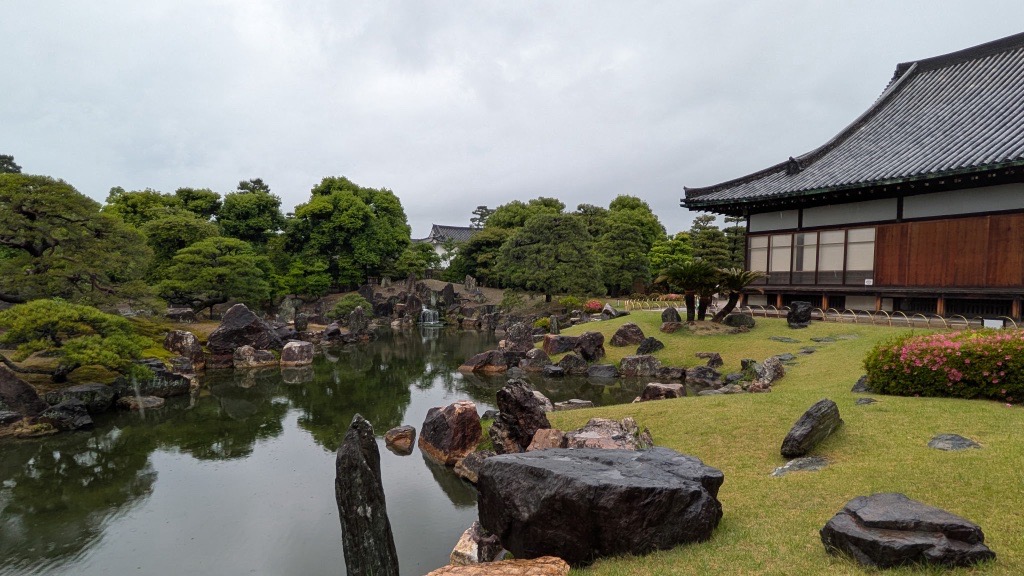
Japanese garden
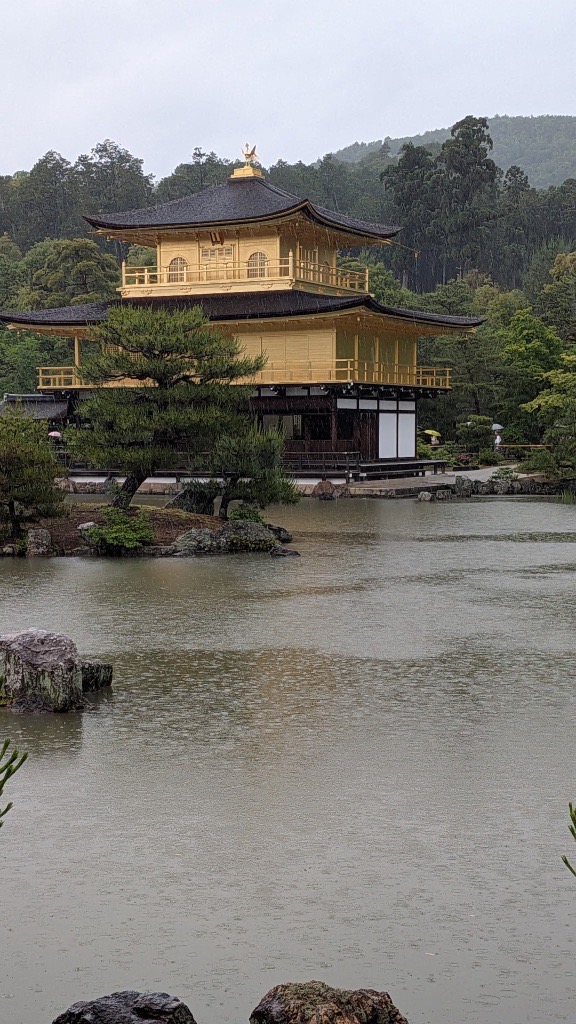
Konkani-Ji Temple
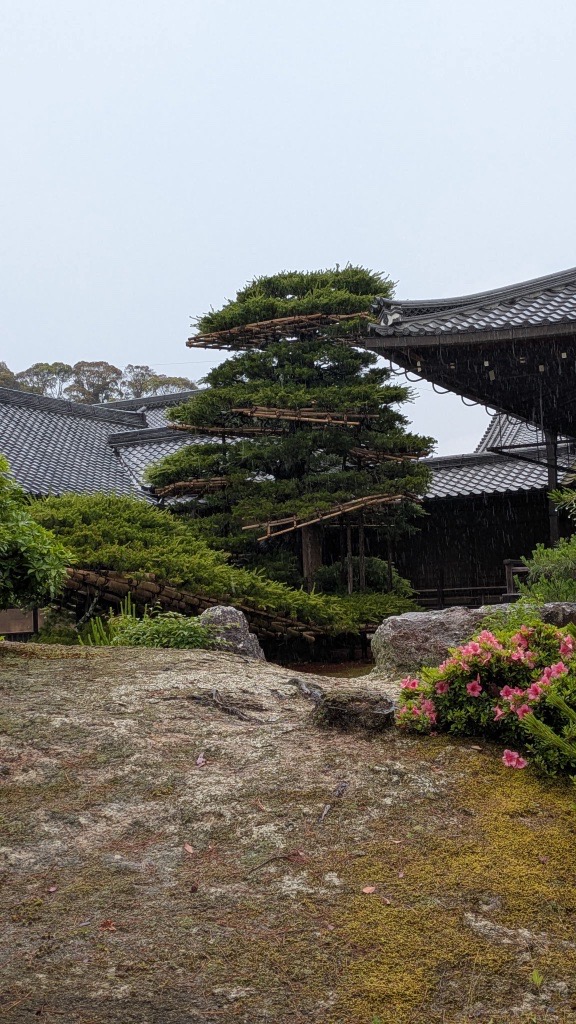
600 year-old pine shaped like a sailing ship
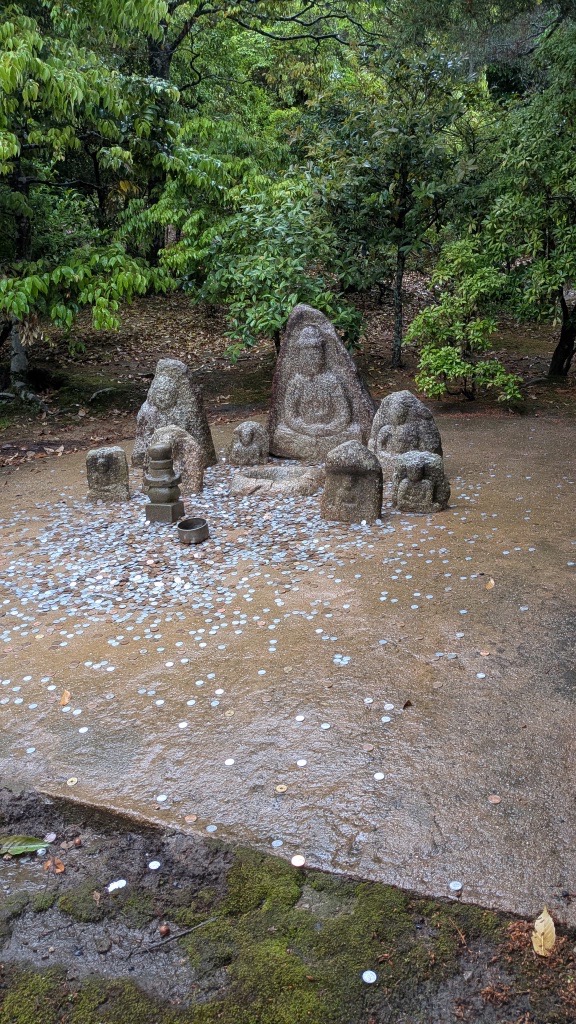
People make wishes to the gods
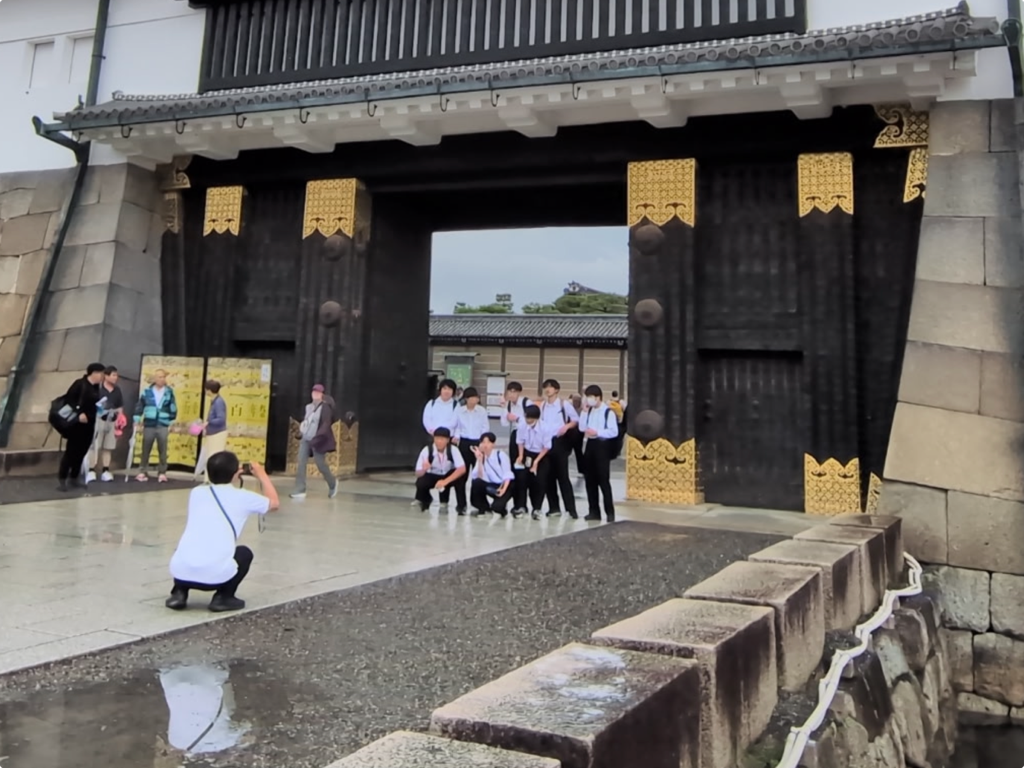
School kids
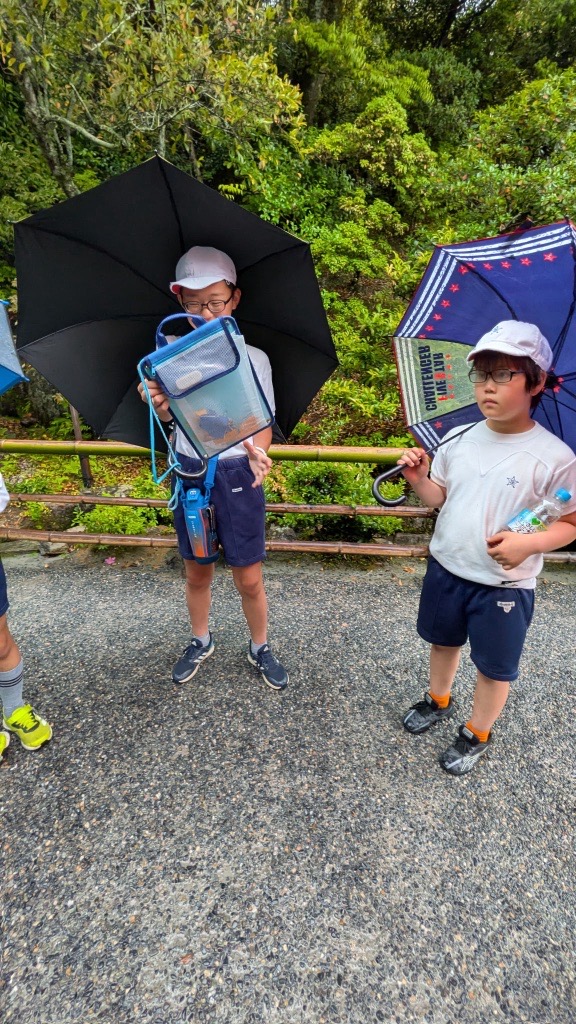
School kids who stopped me and interviewed me
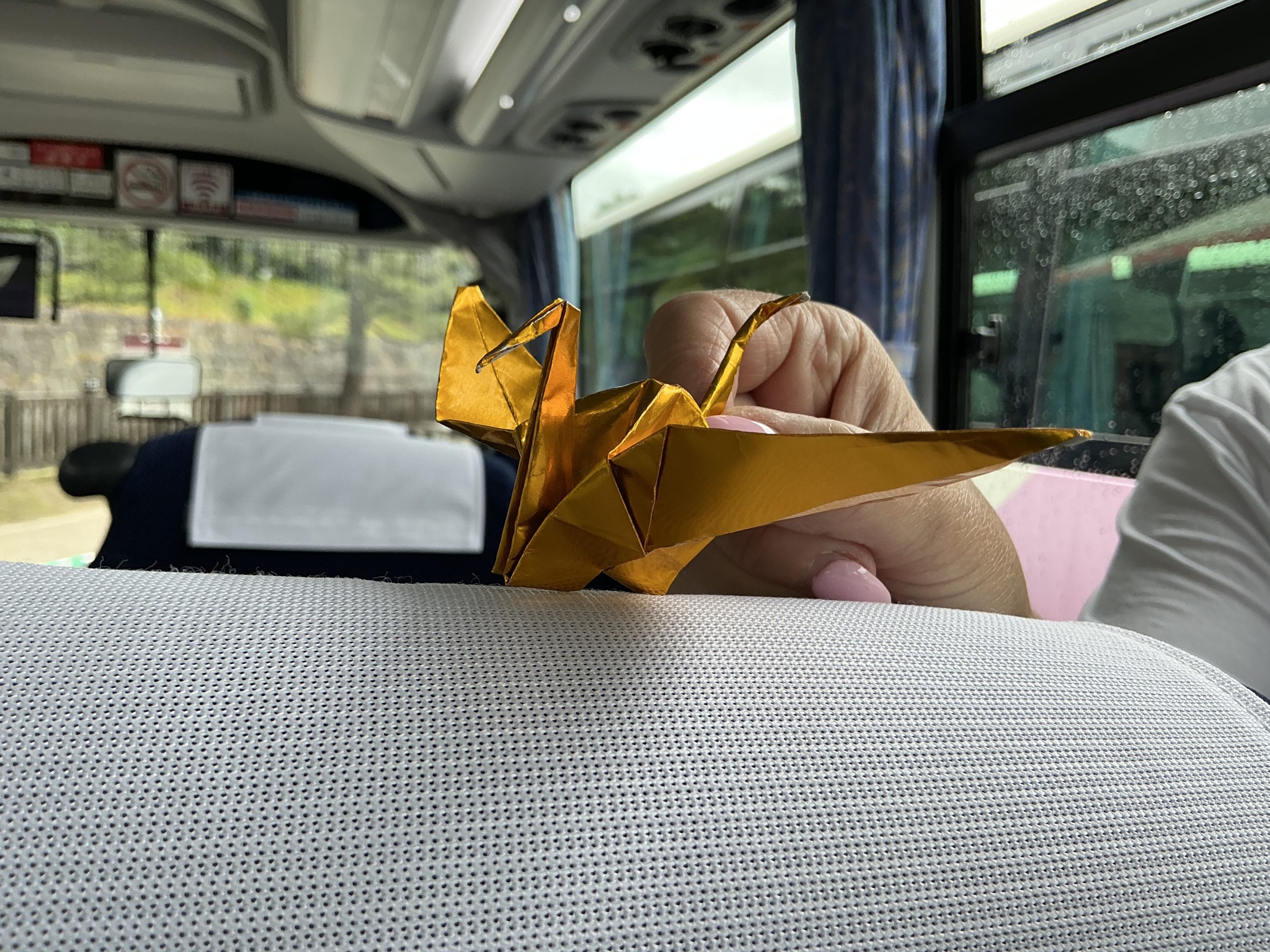
After our “interview” they thanked me and gave me a lovely handmade origami crane, their symbol of peace. I’ll keep this momento in a place of honor.