All,
Our first stops in Japan, on the southern island of Kyushu (one of Japan’s four main islands), were Nagasaki and Kagoshima.
Nagasaki is most famous, of course, for being the site of the second atomic bomb dropped by the United States to end the war against Japan, three days after Hiroshima. But the city is layered with history far beyond that.
It was one of Japan’s rare “windows to the West” during the years when much of the country was closed to foreigners. Dutch traders were allowed there. Christianity took root there. And tragically, it was also the site where 26 Christians were crucified in 1597.
We visited the famous Glover Garden overlooking the harbor, where Scottish merchant Thomas Glover once lived. Oddly—and somehow beautifully—the music playing through the gardens was Scottish bagpipes. I did not expect that in Japan.
Glover was sometimes called “The Scottish Samurai” because of his role in helping modernize Japan and his connections to Mitsubishi and Japanese shipbuilding.
We also attended a lunch where geishas served food and performed traditional dances. Elegant, quiet, graceful. Very different from anything in the West.
Kagoshima, meanwhile, feels completely different.
It is dominated by Sakurajima, one of the world’s most active volcanoes. We visited while it was steadily spewing white smoke into the sky. At one time, Sakurajima was actually an island, until lava flows connected it permanently to the mainland.
We also visited the home associated with “The Last Samurai,” along with some of the most beautiful Japanese gardens I’ve ever seen. Incredible craftsmanship and serenity.
Both cities are port cities. Beautiful. Clean. Quiet. Friendly. Exceptionally well cared for.
But the moment that struck me most happened as our ship departed each harbor.
In both places, a local band (one a symphony orchestra, the other a marching band) played music from the dock while hundreds of local residents stood waving goodbye and shouting warm farewells to the ship and its passengers.
I have traveled a fair amount and honestly cannot remember seeing anything quite like that before.
And there was something deeply moving about it happening in Japan specifically.
Many of the people on the ship are Americans—the same country that dropped the atomic bomb on Nagasaki. Yet today Japan and America are among the closest of allies.
And I noticed one older Japanese-American passenger quietly wiping tears from his eyes.
I think I understood why.
History does not disappear. But sometimes people can still find a way to move forward together.
Onward! -JB
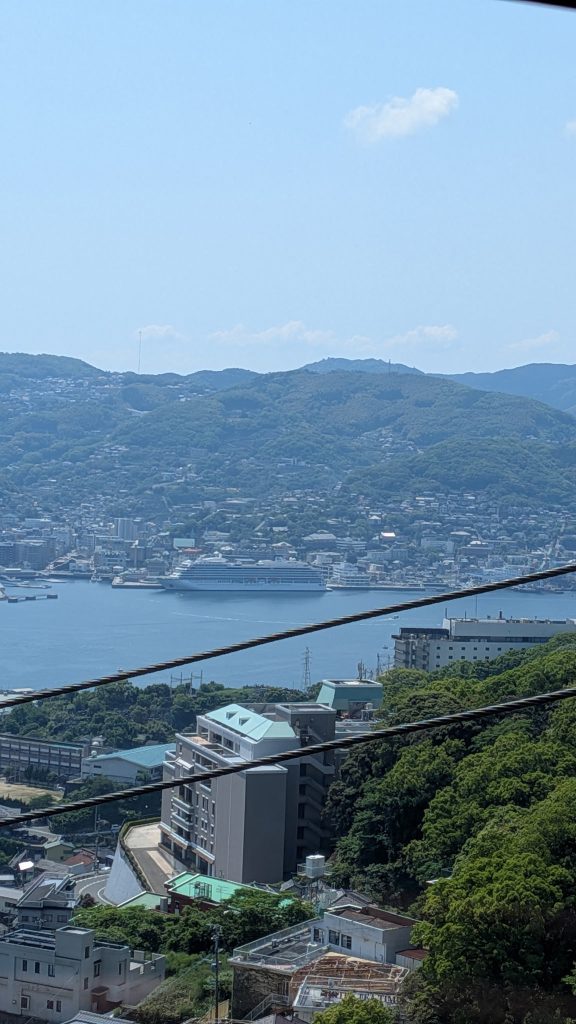
The city of Nagasaki. Our ship in the background. Nagasaki was the 2nd city that was bombed using a nuclear bomb. Three days after Hiroshima in August of 1945, after which Japan surrendered.
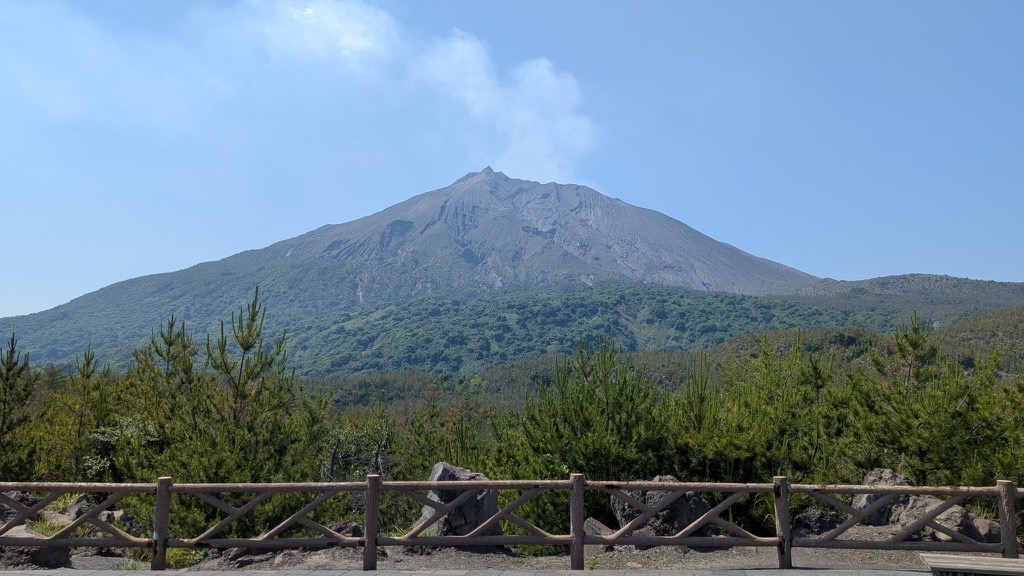
The volcano
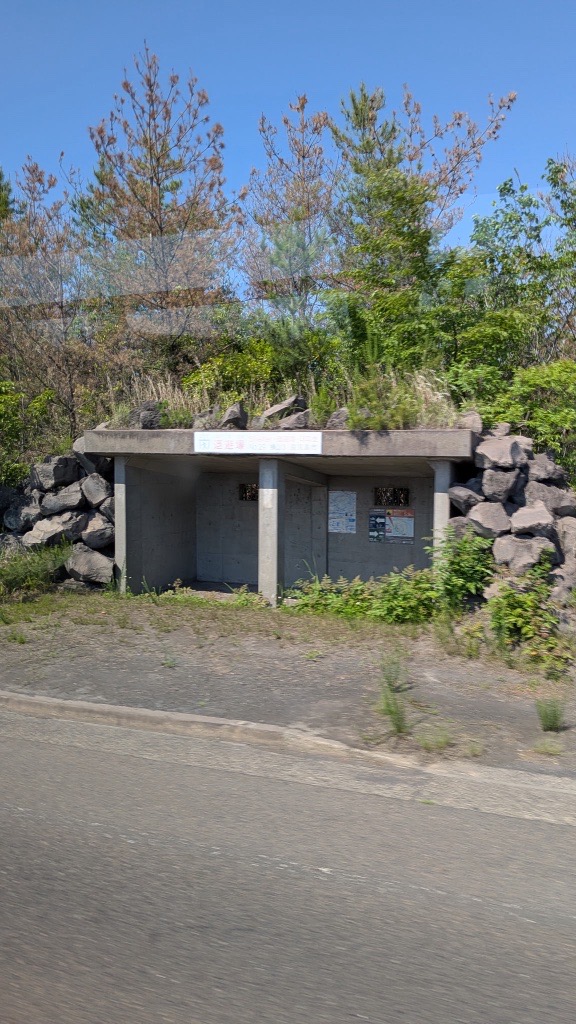
One of many shelters on this volcanic island, Sakurajima. It is where the 4,000 residents take shelter from the lava and rocks whenever the volcano erupts.
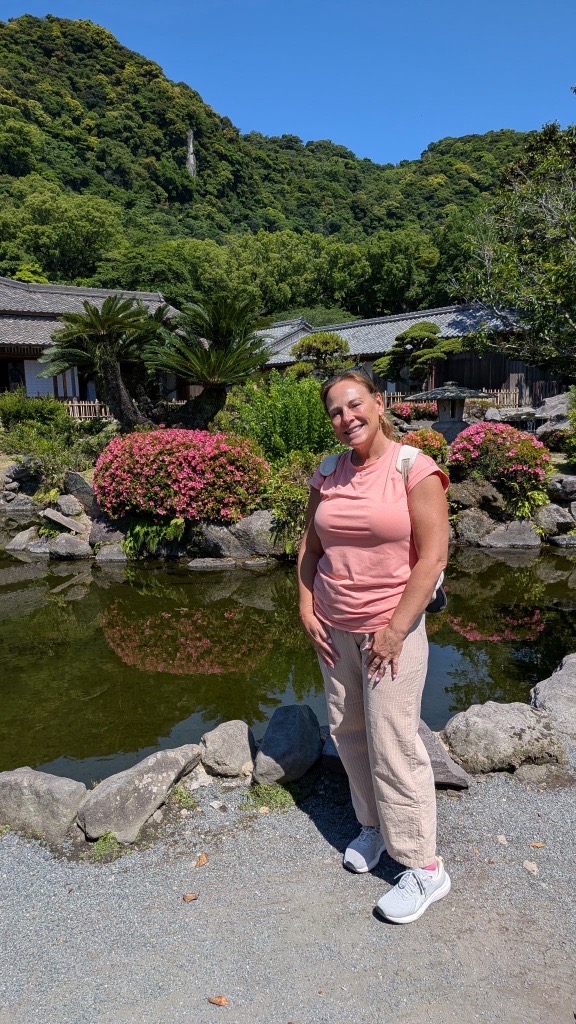
In front of the actual house of the Last Samurai!
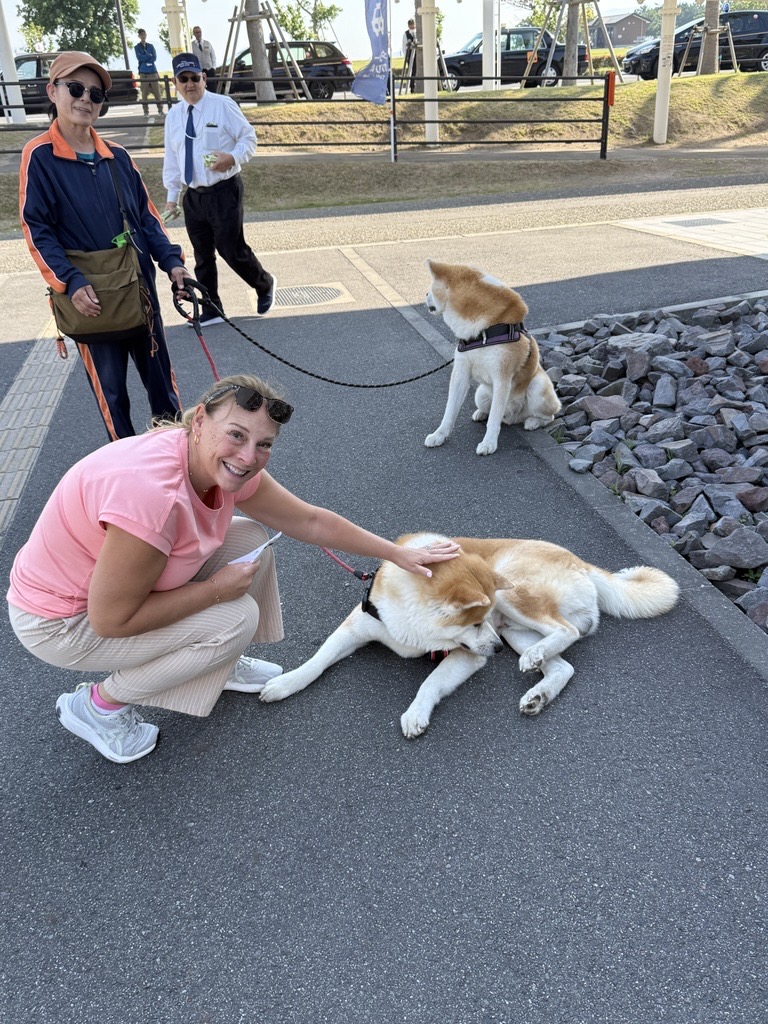
Meeting a couple of genuine akitas
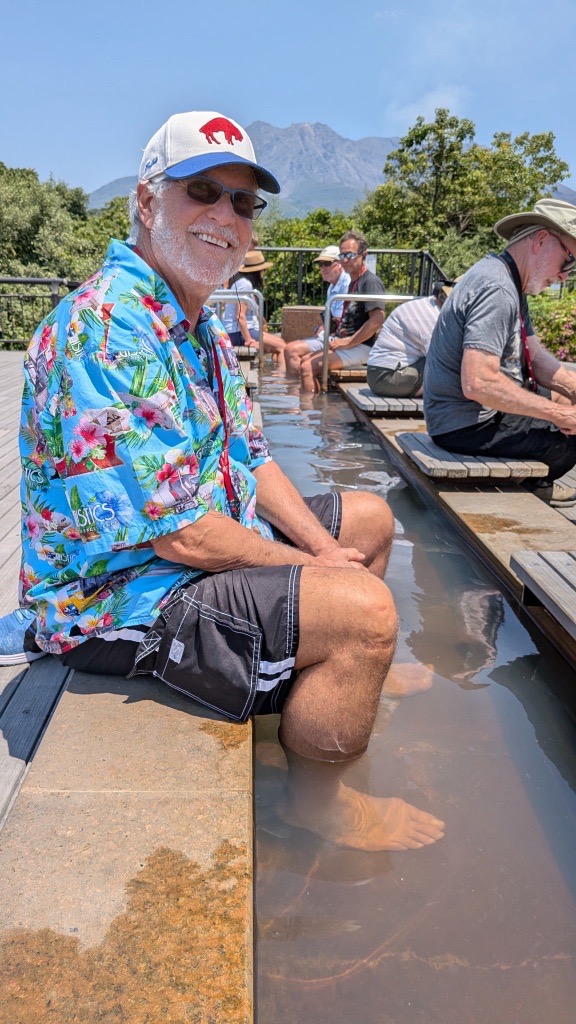
Cooling my feet in 112-degree water
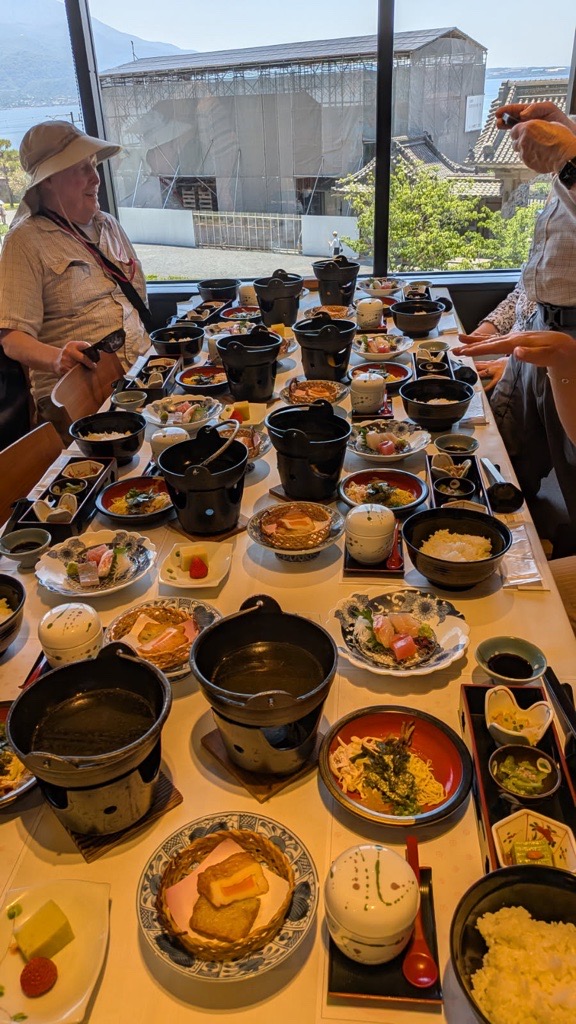
A typical Japanese lunch
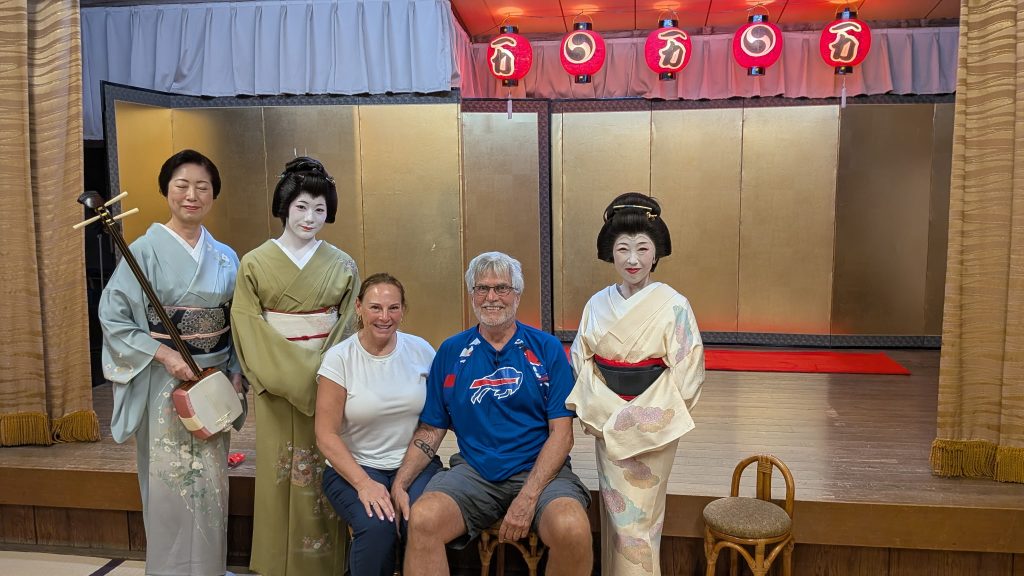
Lunch with Geishas
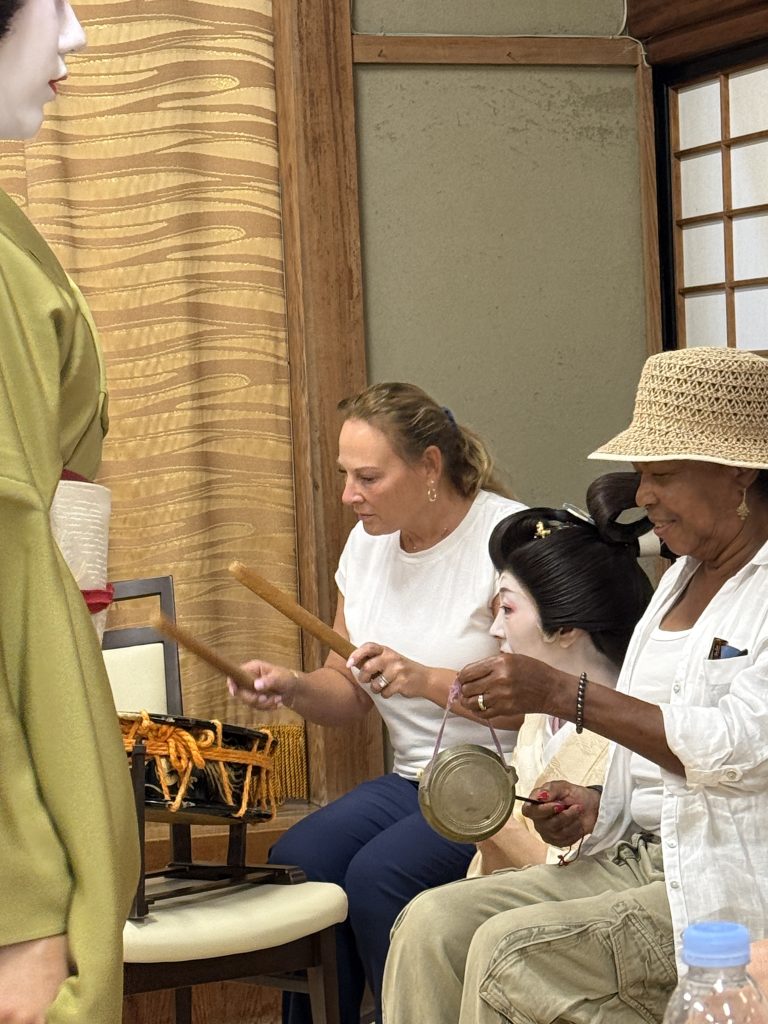
Hallie got her Ginger Baker on (sorry if you young folks don’t get the reference hahahaha) with the geishas at our lunch
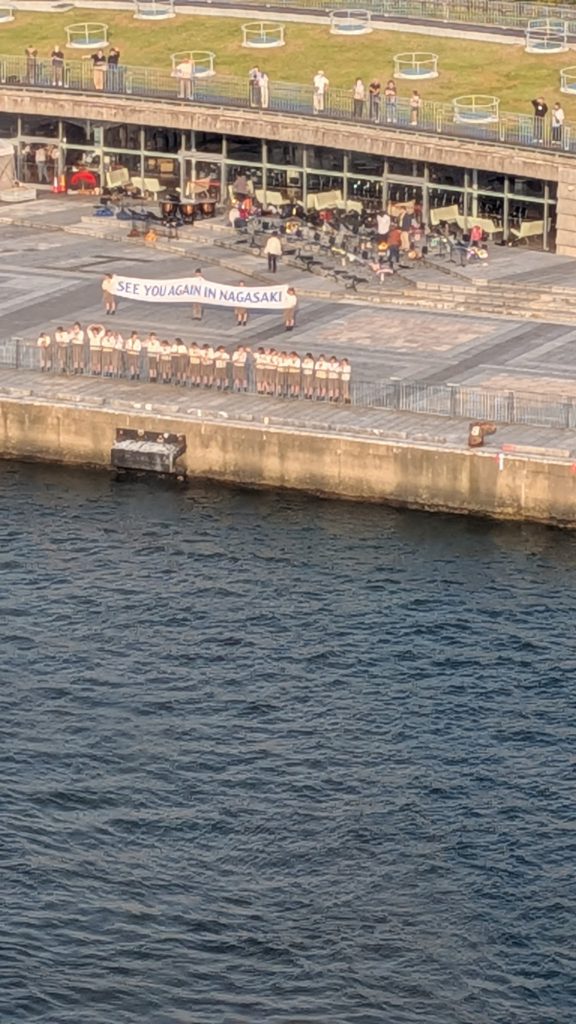
In what was actually a very touching moment, a school band played concert music and bid us farewell in Nagasaki.
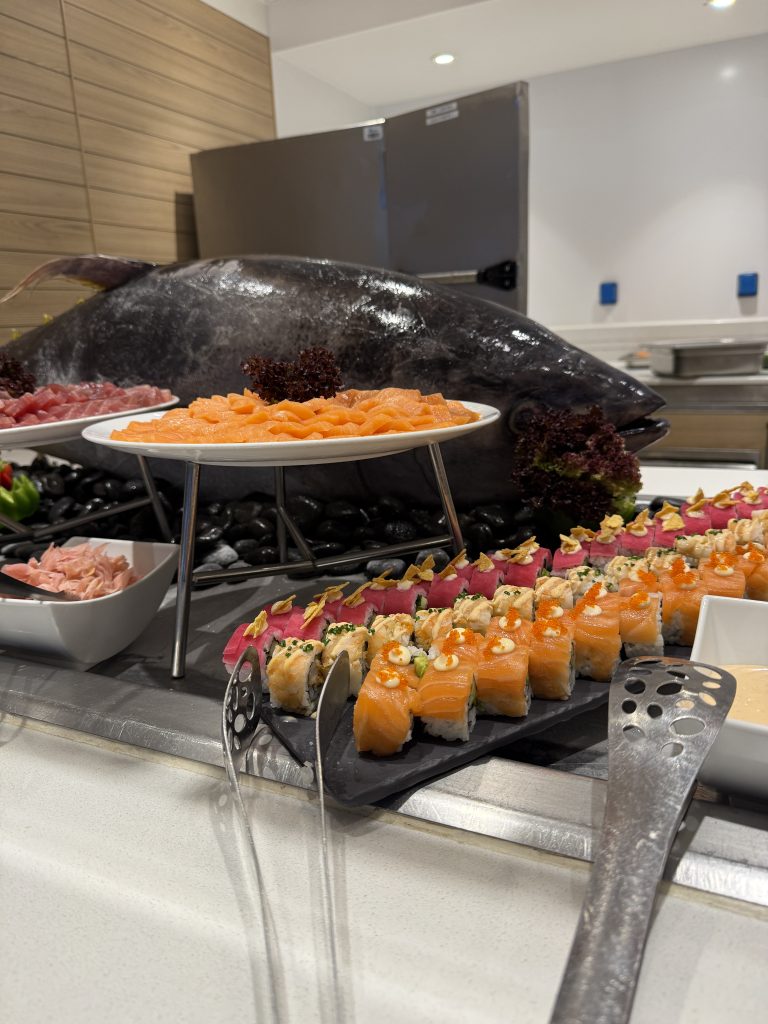
This is some sushi on our ship. That big fish, a yellowfin tuna, is real – and it’s spectacular 🙂
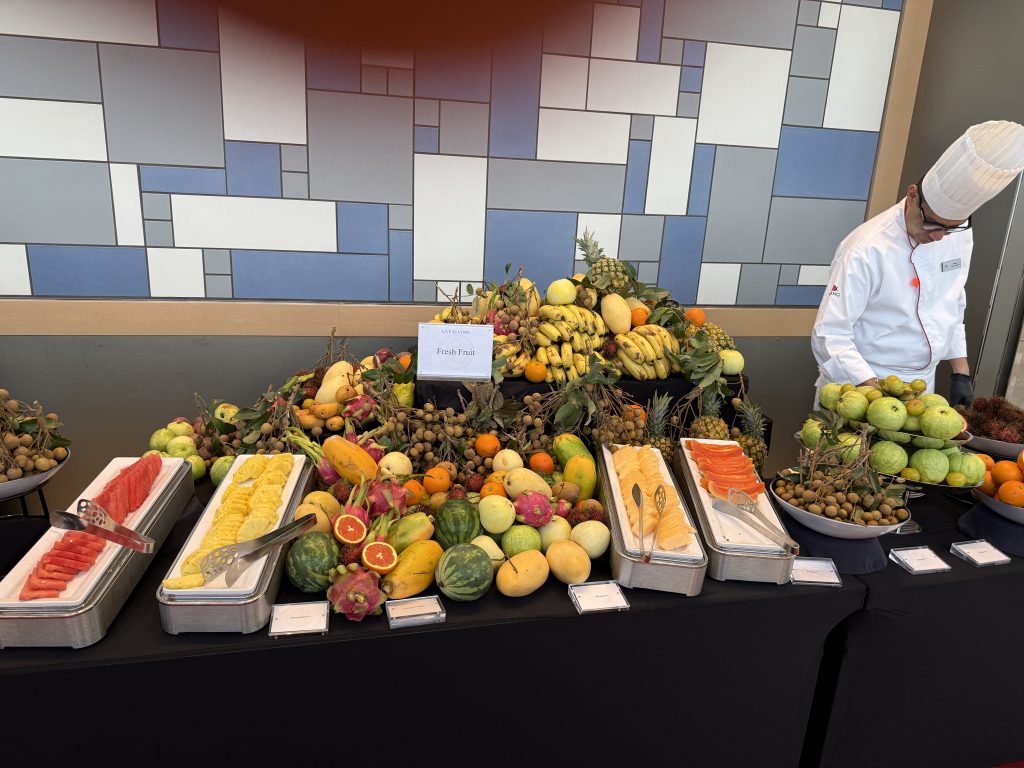
Always fresh fruit aboard