
 A practical guide for supply chain decision-makers evaluating 3PL and 4PL partners.
Not all logistics challenges are the same size. Yet a surprising number of procurement processes default to the same shortlist: a handful of global mega-3PLs with household names, massive infrastructure footprints, and marketing budgets larger than some companies’ annual revenue.
For many shippers — particularly mid-market and growth-stage enterprises — that default is the wrong choice. Not because the mega-3PLs aren’t capable, but because scale cuts both ways. The same infrastructure that makes a provider right for a Fortune 50 retailer can make them slow, expensive, and inattentive for a company shipping $50M to $500M in freight annually.
This guide is designed to help supply chain leaders make a more honest, needs-based evaluation.
The honest case for mega-3PLs
Let’s give credit where it’s due. Providers like DHL Supply Chain, Kuehne+Nagel, DSV, and Maersk are genuinely exceptional at a specific set of problems:
- Highly regulated, multi-continent compliance — pharmaceutical cold chain across 60+ markets, hazmat handling under multiple regulatory regimes, customs brokerage in high-complexity jurisdictions
- Massive, fully automated distribution infrastructure — networks requiring dozens of large-format DCs with robotics, conveyor systems, and labor management at scale
- Fortune 50 outsourcing relationships — where a shipper’s freight volume warrants a dedicated business unit from the provider and SLA structures that only make financial sense at enormous scale
If your supply chain genuinely fits this profile, a mega-3PL belongs on your shortlist.
Where mega-3PL becomes a liability
Here’s what rarely gets said in RFP processes: size creates friction.
Mega-3PLs operate through layers of account management, regional divisions, and global service centers. For a shipper outside their top revenue tier, that means slower escalation paths, standardized solutions that don’t flex to your industry’s quirks, and pricing structures built for volume that you may not yet have.
The symptoms show up quickly after onboarding: dedicated contacts who turnover frequently, technology platforms that require months of integration work, and service recovery processes that route through a call center rather than to a decision-maker.
For companies with $500M–$5B in revenue, complex multi-modal or project-based freight requirements, or operations spanning multiple regions without full Fortune 50 scale, there’s a better fit.
The high-touch mid-market alternative
A differentiated class of global 3PLs and 4PLs has emerged to serve exactly this segment. The defining characteristics are:
Genuine global reach without the bureaucratic overhead
Logistics Plus, for example, operates in 55+ countries with 1,400+ supply chain professionals worldwide — but is structured to deliver executive access and customized solutions rather than one-size-fits-all service programs.
Multi-modal capability with vertical fluency
This tier excels at the kinds of freight problems that fall between the cracks of standard programs: project cargo, mission-critical expedites, specialized handling for industrial or healthcare shipments, emerging-market origin/destination pairs, and hybrid managed transportation arrangements.
Technology that integrates, not dominates
Rather than requiring shippers to adopt a proprietary TMS as the cost of doing business, high-touch providers typically connect into existing client infrastructure and configure around the shipper’s needs.
Orchestration model
For scenarios requiring on-the-ground infrastructure in markets where no single provider has full density, the right answer is often a 3PL acting as orchestrator — coordinating a curated network of specialized carriers, in-country agents, and local partners under a single point of accountability. This is frequently a better outcome than forcing a mega-3PL to serve markets where its own network is thin.
A practical decision framework
Before issuing your next RFP, answer these questions honestly:
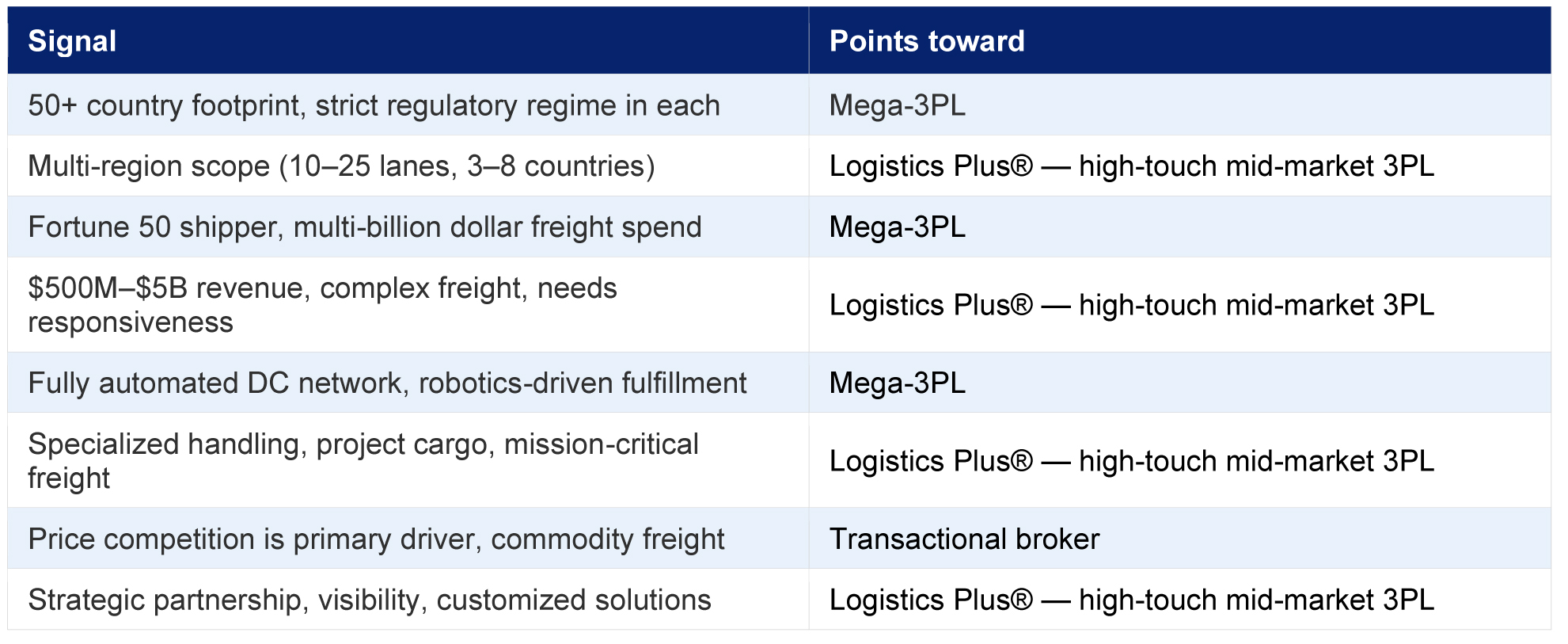
The framework above isn’t about ruling out any provider category — it’s about matching your actual requirements to the right model.
When collaboration beats consolidation
One overlooked outcome: some of the most effective supply chain arrangements are not single-provider consolidations. They’re orchestrated partnerships in which a high-touch 3PL manages the relationship and visibility layer, while specialist providers handle execution in specific lanes or regions.
Logistics Plus has operated alongside mega-3PLs in exactly this configuration — stepping in as the orchestrator for lanes, modes, or customer segments where a primary provider’s program didn’t extend effectively. The result is often better service performance, more competitive pricing, and a single point of escalation for the shipper.

SUPPLY CHAIN SUCCESS STORY
In Practice: How a Global Industrial Distributor Gained Full Supply Chain Visibility
The challenge
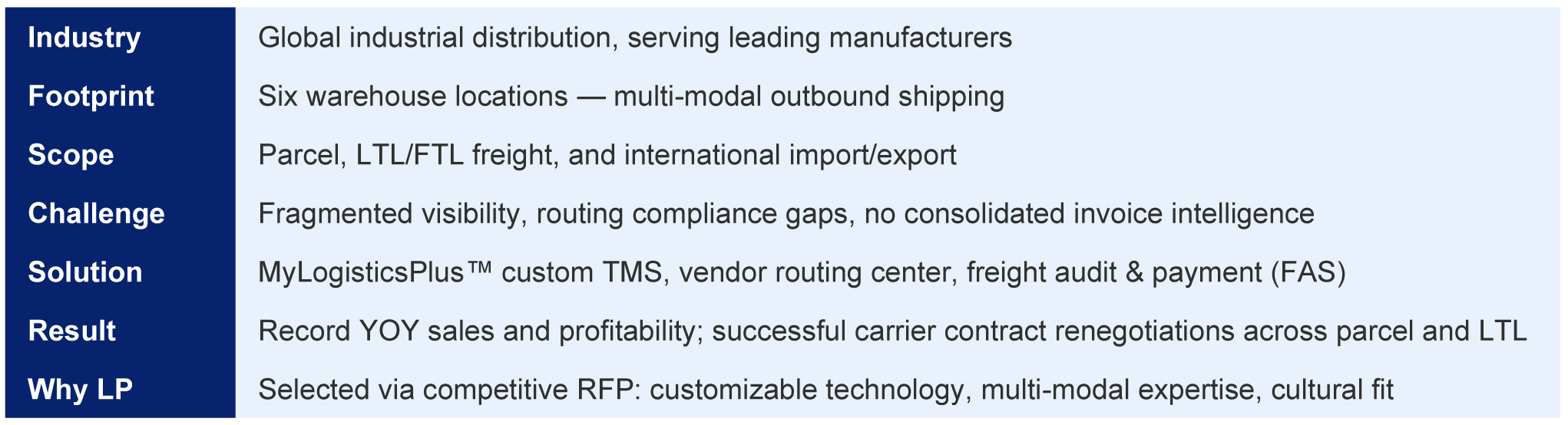
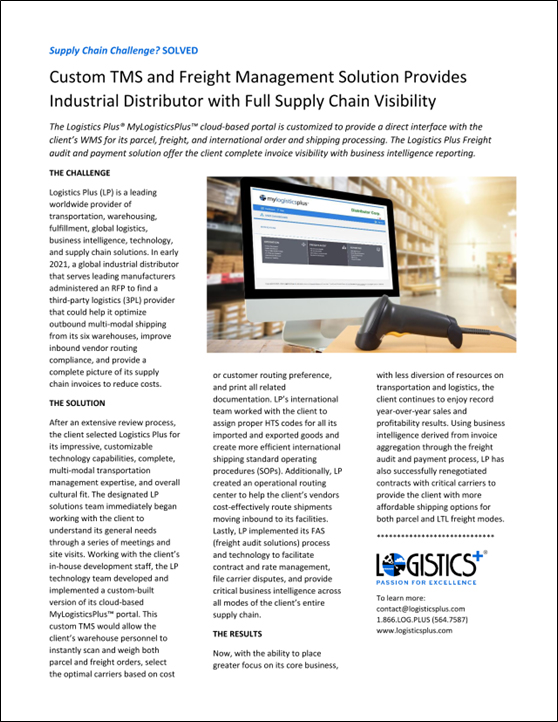
In early 2021, a global industrial distributor serving leading manufacturers ran a competitive RFP to find a 3PL partner to help it optimize outbound multimodal shipping across its six warehouses, improve inbound vendor routing compliance, and gain a consolidated view of supply chain invoices to identify cost-reduction opportunities.
The core issue wasn’t capacity or global reach. It was operational fragmentation. Warehouse personnel were manually selecting carriers without real-time rate-comparison tools. Vendor routing compliance was inconsistent, meaning inbound shipments weren’t always moving cost-effectively. And critically, the company had no consolidated view of freight invoices across modes, making it nearly impossible to identify overpayment patterns or negotiate from a position of data.

Why Logistics Plus was selected
After an extensive review process, the client selected Logistics Plus for its customizable technology capabilities, complete multi-modal transportation management expertise, and overall cultural fit — not on price alone. That distinction matters: it reflects exactly the kind of engagement where a high-touch provider outperforms a mega-3PL on the criteria that actually drive outcomes.
What Logistics Plus built
Working directly with the client’s in-house development team, LP’s technology group implemented a customized version of its cloud-based MyLogisticsPlus™ portal — configured to interface directly with the client’s existing warehouse management system. Warehouse staff could now scan and weigh parcel and freight orders, instantly compare carrier options by cost or customer routing preference, and generate all required documentation from a single interface.
On the international side, LP’s team assigned proper HTS codes across the client’s imported and exported goods catalog and developed streamlined standard operating procedures for international shipment processing — eliminating the ad hoc handling that had previously created compliance exposure.
LP also established a dedicated vendor routing center to help the client’s inbound suppliers route shipments cost-effectively to its facilities. And LP implemented its freight audit and payment (FAS) solution to consolidate invoice management, handle carrier disputes, and generate business intelligence reporting across all modes.
Download Case Study
The outcome
With logistics operations consolidated under a single managed solution, the client redirected internal resources toward its core business. The company has since recorded year-over-year growth in sales and profitability. Using business intelligence derived from LP’s freight audit and payment process, LP successfully renegotiated carrier contracts across parcel and LTL modes, delivering more competitive shipping rates without changing service quality.
The most telling detail: this engagement was won on the strength of customizable technology, multi-modal expertise, and cultural fit — the differentiators that don’t show up in a standard mega-3PL comparison matrix.
Read more supply chain success stories at logisticsplus.com/about-us/media-resources/case-studies/
 The bottom line
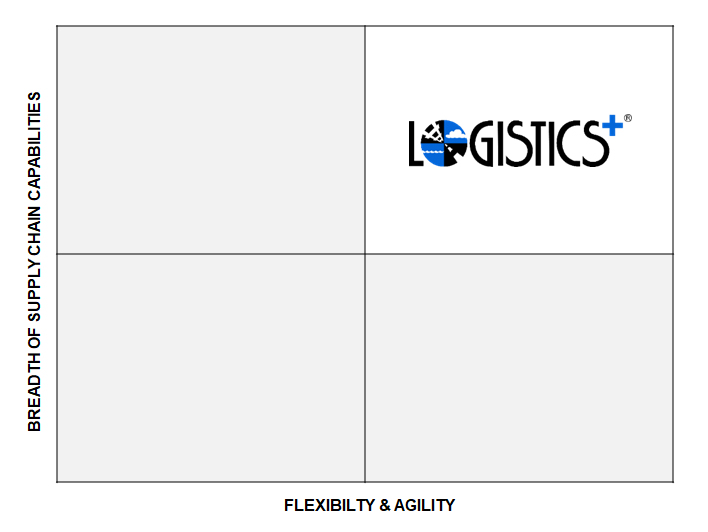
Scale is not a proxy for quality. The right 3PL partner is the one whose operational model, culture, and capabilities are genuinely aligned with your freight profile — not the one with the largest booth at trade shows.
If your supply chain sits in the mid-market to lower-enterprise range, involves complexity that standardized programs won’t serve well, or requires the kind of executive attention that only a provider who genuinely wants your business can deliver, a high-touch global 3PL is likely the better answer.
Logistics Plus is built for exactly that space and is fast becoming the preferred 3PL/4PL for mid-market and upper-mid-market brands whose logistics are too complex for e-comm-only 3PLs but too small or too nuanced to be strategic for mega-integrators. We’d be glad to walk through your network and tell you honestly whether we’re the right fit — and if we’re not, point you in the right direction.
