
by Scott Frederick | Apr 28, 2026 | News
Our growing family of country and specialty websites reflects LP’s global depth and reach.
 At Logistics Plus (LP), our commitment to local expertise and global reach isn’t just a tagline — it’s built into how we show up online. We’re proud to highlight our growing network of regional, specialty, and affiliate websites, each designed to serve the unique needs of customers, partners, and talent in specific markets worldwide.
From country-specific branches across Asia-Pacific, Europe, the Americas, and beyond, to specialized entities covering everything from chartering to consulting to linguistics solutions, the Logistics Plus digital ecosystem has expanded significantly in recent years. Each site is a front door to the LP experience — localized, relevant, and connected to the broader global platform at logisticsplus.com.
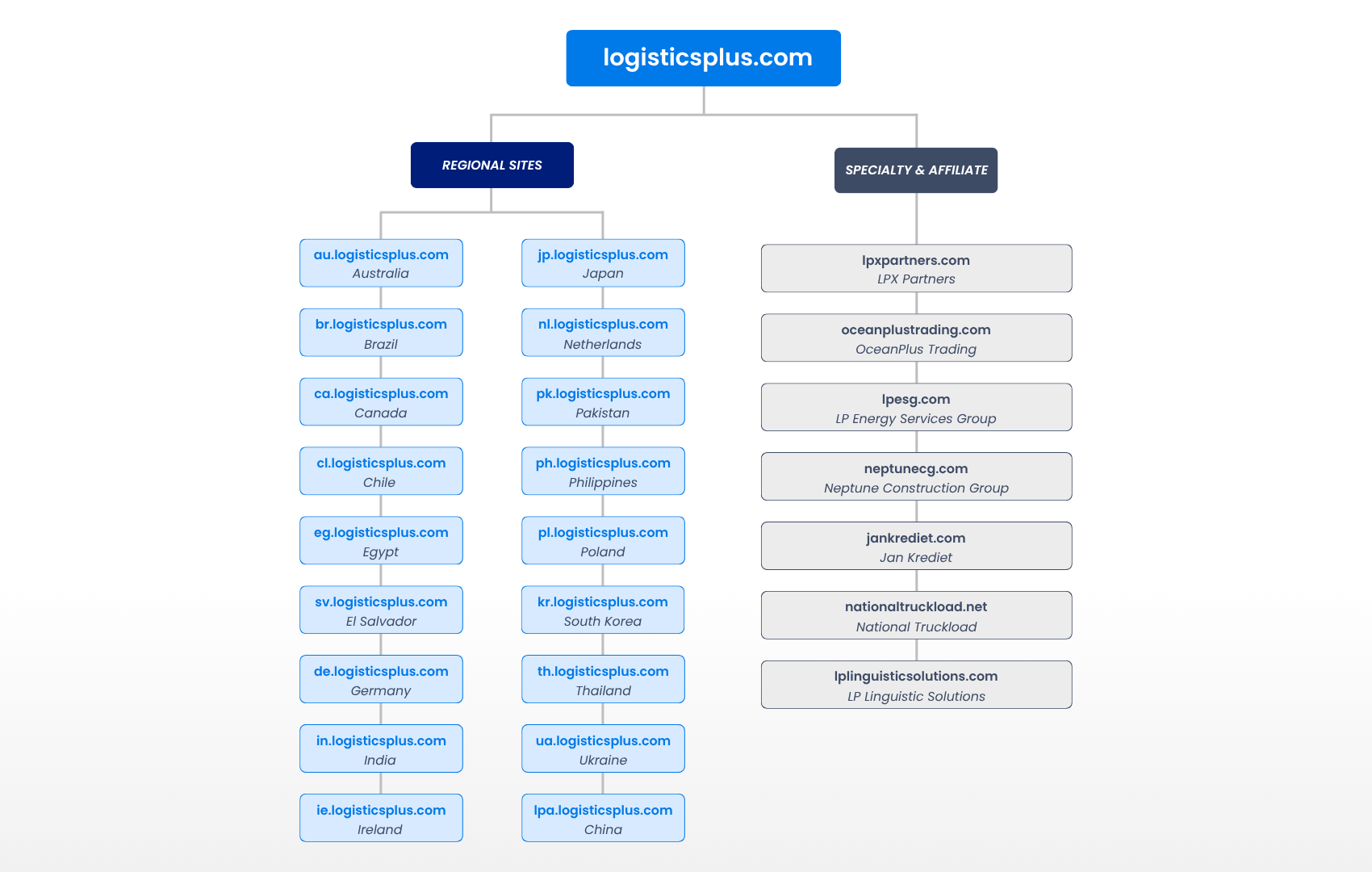
Click image above to view a PDF with links to each website.
Our regional country sites include:
Our specialty and affiliate sites include:
Whether you’re a shipper in Southeast Asia, a partner in Central Europe, or a company exploring sustainable supply chain options, there’s a Logistics Plus digital home built with you in mind. Explore our full global network locations at logisticsplus.com/directory/our-locations/.

by Scott Frederick | Apr 28, 2026 | News

Logistics Plus is Named a 2026 Top 100 Logistics & Supply Chain Technology Provider
It’s the fourth straight year that Logistics Plus has been named to the annual Inbound Logistics magazine list.
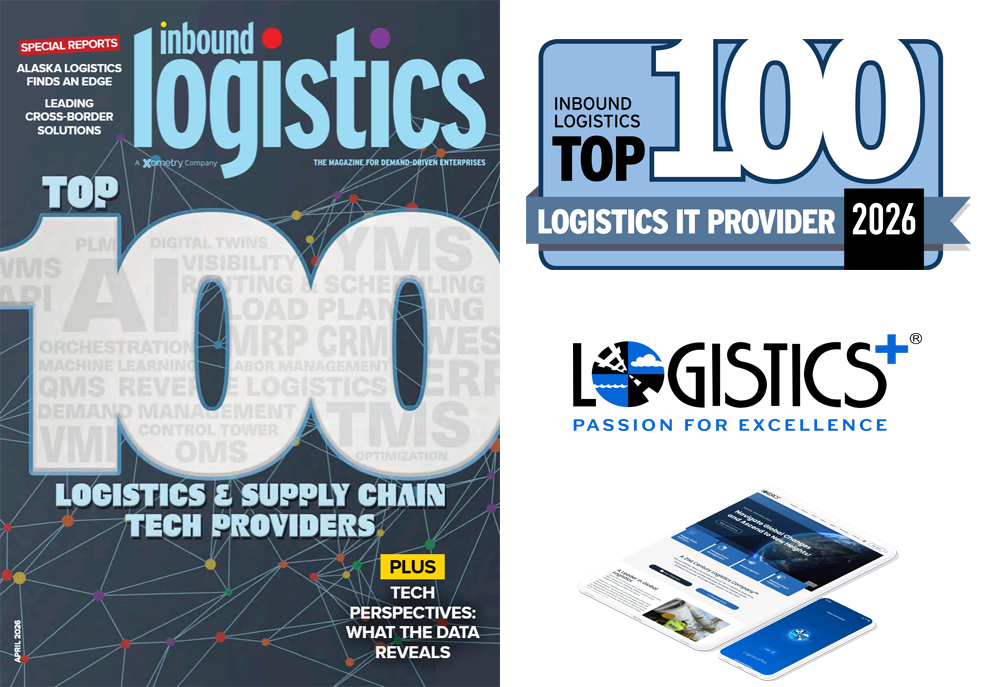 ERIE, PA (April 28, 2026) – Logistics Plus, Inc. (LP), a global leader in transportation, logistics, and unique supply chain solutions, is proud to announce that it has been named a Top 100 Logistics & Supply Chain Technology Provider for 2026 by Inbound Logistics magazine. The list, curated annually by the editors of Inbound Logistics, recognizes 100 logistics companies whose solutions are central to addressing transportation, logistics, and supply chain challenges and whose customer successes are well documented.
“Our editorial selection committee reviewed more than 400 submissions this year, carefully evaluating a rapidly expanding field of innovative solutions,” said Felecia Stratton, Editor for Inbound Logistics. “From this highly competitive pool, only 100 providers were chosen—recognizing those delivering the most impactful technology and value to the supply chain community.”
The 2026 Top 100 list will appear in the April print, digital, and app editions, and will be featured on the Inbound Logistics website throughout the year, along with promotion across our media platforms.
View the list online at https://www.inboundlogistics.com/articles/top-100-logistics-it-providers/ or read the April 2026 digital edition of Inbound Logistics at https://www.inboundlogistics.com/digital-editions/.
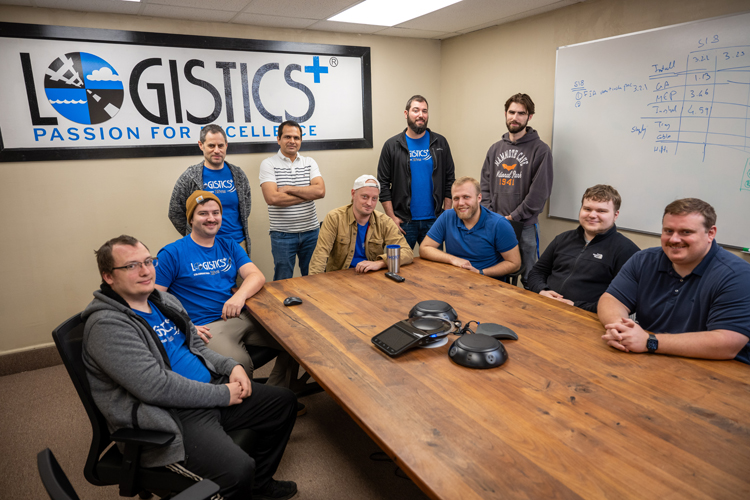
Some of the award-winning Logistics Plus Application Development & Engineering Team assemble for a meeting in Erie, PA.
About Inbound Logistics
Inbound Logistics (IL) is the pioneering magazine empowering demand-driven enterprises. IL’s educational mission is to guide businesses to efficiently manage logistics, reduce and speed inventory, and neutralize transportation cost increases by aligning supply to demand and adjusting enterprise functions to support that paradigm shift. More information about demand-driven enterprise practices is available at inboundlogistics.com.
About Logistics Plus, Inc.
Logistics Plus, Inc. is a unique global supply chain solutions company built for what’s next. With nearly $1 billion in annual revenue and operations spanning 55+ countries, Logistics Plus® delivers transportation, warehousing, fulfillment, project management, and technology solutions for businesses navigating a complex, ever-changing world. Privately held and people-driven, the company’s 1,400+ employees bring its trademark Passion for Excellence™ to every customer relationship and every challenge. Logistics Plus is a 21st Century Logistics Company™ recognized as a Great Place to Work® and a top global logistics and technology provider. Learn more at logisticsplus.com.




by Ryan Markiewicz | Apr 27, 2026 | News
 Bahadir Erdil, Global Projects Director at Logistics Plus, was featured on the recent (4/24/26) Business Spotlight program, produced in partnership with WPSE Money Radio. Business Spotlight is a monthly, 30-minute show that airs regionally and streams globally.
In this month’s Logistics Plus segment, Bahadir shares his professional background, the multiple roles he oversees within Logistics Plus, and insights into several large-scale projects he has recently managed. He also discusses the detailed planning, coordination, and execution required to successfully handle complex project cargo operations. In addition, Bahadir highlights the newly announced OceanPlus Trading venture and explains how it is expected to create new opportunities for future project business worldwide.
You can listen to a replay of the interview on the Logistics Plus podcasts page or by clicking below on our LP Radio channel on Spotify.

by Scott Frederick | Apr 22, 2026 | News
There’s a question every serious supply chain conversation eventually lands on:
What exactly does Logistics Plus do?
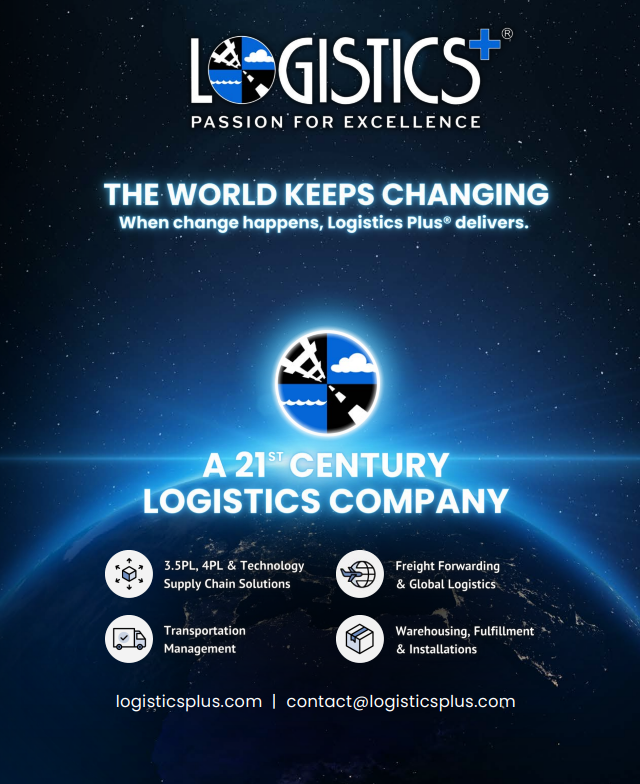 The honest answer is: more than most companies expect. And now we’ve made it easier than ever to see the full picture. Our newly updated corporate brochure is available online. This concise introduction to Logistics Plus offers a comprehensive overview of the solutions we provide to mid-market and top-tier companies navigating some of the world’s most complex supply chain environments.
Download the Logistics Plus Corporate Brochure →
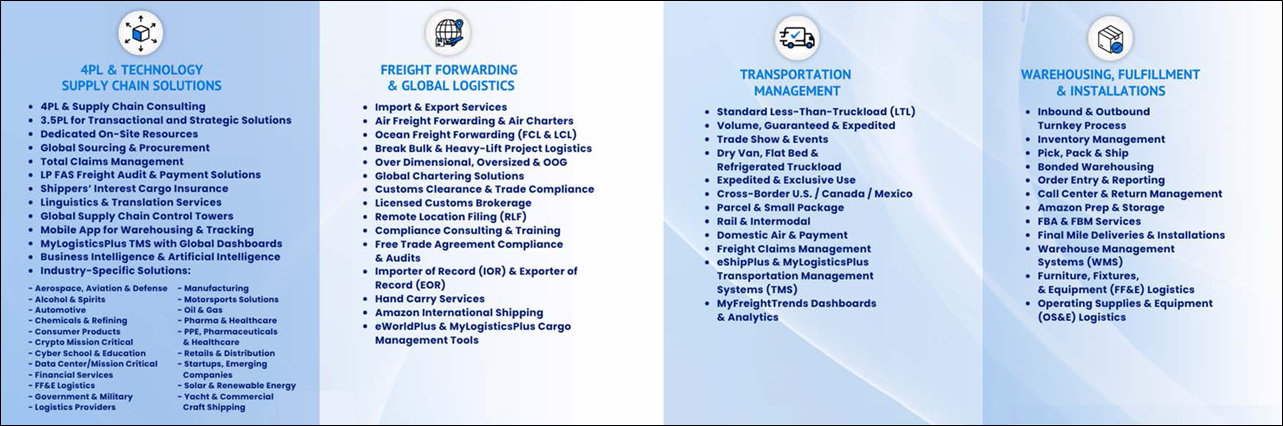
One company. Four solution categories. Endless configurations.
Logistics Plus organizes its solutions into four core areas — not because we operate in silos, but because our clients’ challenges rarely fit neatly into one:
4PL & Technology Solutions — For companies that need more than a provider, we act as a supply chain integrator: managing carrier networks, deploying our MyLogisticsPlus™ technology platform, and providing the Global Control Tower visibility that gives operations teams a real-time window into every shipment, every mode, across every market. Fewer expedites. Fewer missed SLAs. Lower logistics cost per unit.
Freight Forwarding & Project Logistics — Complex cargo is our bread and butter. Ocean, air, breakbulk, oversize, mission-critical — we move freight that other providers decline, with in-house expertise across 55+ countries and a track record that includes some genuinely extraordinary projects.
Transportation Management — Domestic and cross-border, LTL to full truckload, eShipPlus™ TMS to fully managed transportation programs. We optimize carrier selection, audit freight invoices, manage routing compliance, and deliver the kind of account-level attention that becomes harder to find as providers grow.
Warehouse, Fulfillment & Installations — From on-demand storage to full distribution center operations, FF&E project management to last-mile fulfillment, we build warehouse solutions around your product and your network — not the other way around.
Built for what’s next. Built for you.
What sets Logistics Plus apart isn’t the list of services. It’s how we deliver them. Every engagement starts from scratch. We don’t hand clients a template; we build solutions calibrated to their freight profile, their industry, and their growth trajectory. That’s as true for a $500M industrial distributor as it is for a Fortune 500 enterprise.
Our Global Control Tower capability is the engine behind that promise. Staffed by experienced logistics professionals and powered by integrated technology, it gives clients end-to-end supply chain visibility that reduces reactive firefighting, costly expedites, carrier exceptions, and SLA misses that drain logistics budgets and operations teams alike.
Speed and agility aren’t marketing language for us. When the market shifts, capacity tightens, tariffs change, or new lanes open, we move faster than organizations built for scale at the expense of flexibility.
Explore our full capabilities in the updated brochure, or visit our marketing flyer page to find additional materials.
Ready to talk about your supply chain?
by Scott Frederick | Apr 21, 2026 | News
Logistics Plus Moves Up the Ranks Among the Transport Topics 2026 Top 100 North American Logistics Companies
Logistics Plus also ranked among the Top 50 Dry Storage Warehousing Firms and Freight Brokerage Firms.
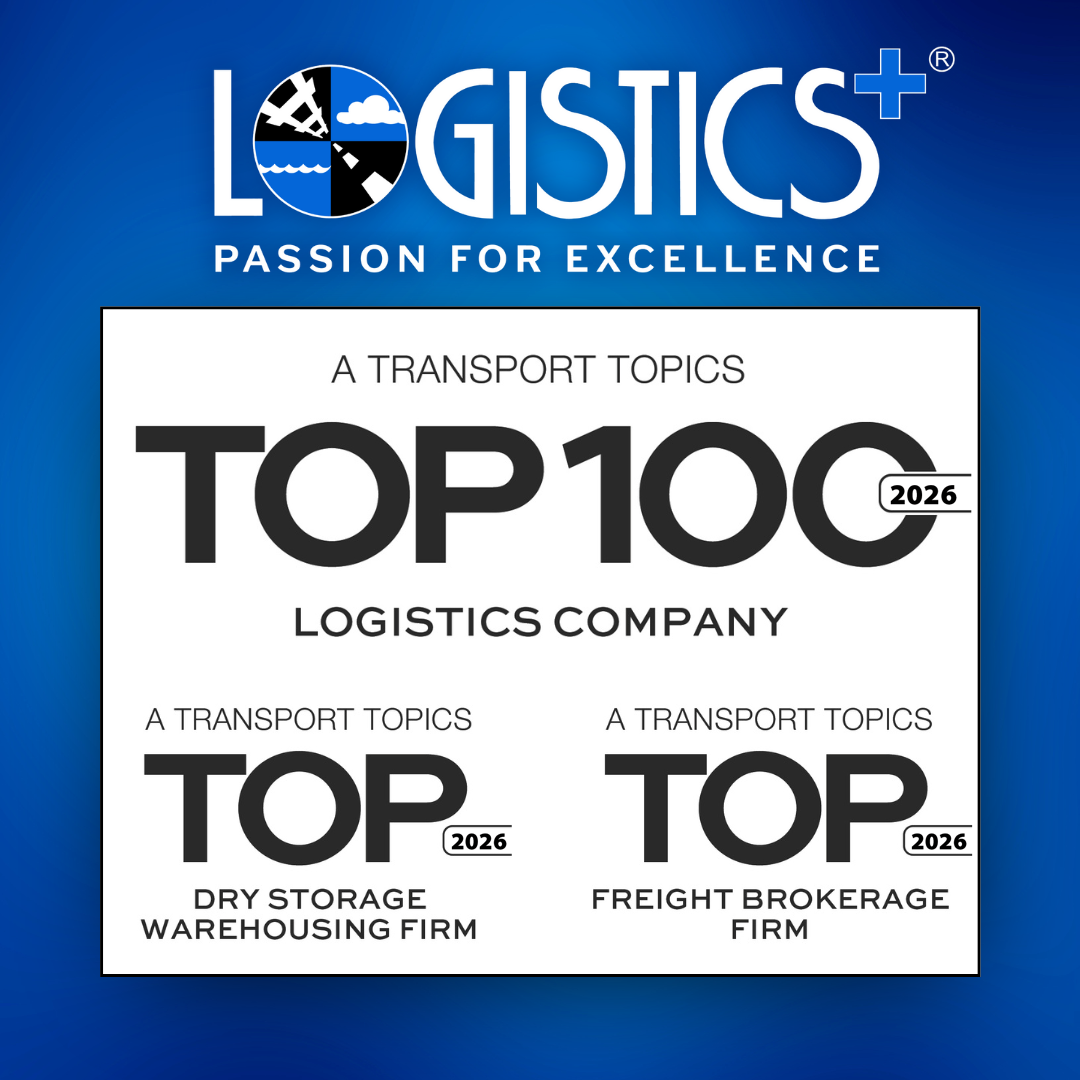 ERIE, PA (April 21, 2026) – Logistics Plus, Inc. (LP), a global leader in transportation, logistics, and unique supply chain solutions, is proud to announce that it has been named to the annual Transport Topics Top 100 list of North America’s largest logistics companies based on gross revenue for the most recent 12-month period. Logistics Plus moved up two positions in the rankings, for a second straight year, to the 78th spot. It’s the fourth straight year that Logistics Plus has been named to the list. Logistics Plus also ranked as the 32nd-largest dry storage warehousing firm (no change from last year) and the 48th-largest freight brokerage firm (up from 66th last year).
“TT’s Top 100 Logistics Companies list ranks the largest 3PL providers in North America based on annual gross revenue generated by their logistics services, including freight brokerage, transportation management, freight forwarding, warehousing, and asset-based dedicated contract carriage,” said Seth Clevenger, Managing Editor of Features and Multimedia at Transport Topics. “No. 78 Logistics Plus expanded its brokerage operations through its purchase of Chicago-based LoadDelivered Logistics in September.”
“When we started in 1996, it was just a handful of people. No grand plan. No big investor. Just energy, ideas, and a belief that if we worked harder, cared more, and kept showing up, good things would happen. A true passion for excellence,” said Jim Berlin, Founder and CEO of Logistics Plus. “Now here we are, 30 years later, in a world that feels uncertain and complicated. Wars, elections, tariffs, supply chain disruptions. It’s a lot. And yet, through all of it, this team keeps moving, keeps solving, keeps growing, and keeps finding a way or making one.”
To learn who made the list and read more about the issues facing logistics companies, visit Transport Topics at https://www.ttnews.com/logistics/rankings/2026.
About Transport Topics
Since 1935, Transport Topics has been the news leader in trucking and freight transportation. When it comes to major issues, industry events, and new developments, TT journalists get the story first and get it right, keeping readers informed about all aspects of the trucking industry and helping them stay ready for what’s to come. Explore the latest at https://www.ttnews.com.

Scott Frederick Comments
About Logistics Plus, Inc.
Logistics Plus, Inc. is a unique global supply chain solutions company built for what’s next. With nearly $1 billion in annual revenue and operations spanning 55+ countries, Logistics Plus® delivers transportation, warehousing, fulfillment, project management, and technology solutions for businesses navigating a complex, ever-changing world. Privately held and people-driven, the company’s 1,400+ employees bring its trademark Passion for Excellence™ to every customer relationship and every challenge. Logistics Plus is a 21st Century Logistics Company™ recognized as a Great Place to Work® and a top global logistics and technology provider. Learn more at logisticsplus.com.
by Ryan Markiewicz | Apr 20, 2026 | News
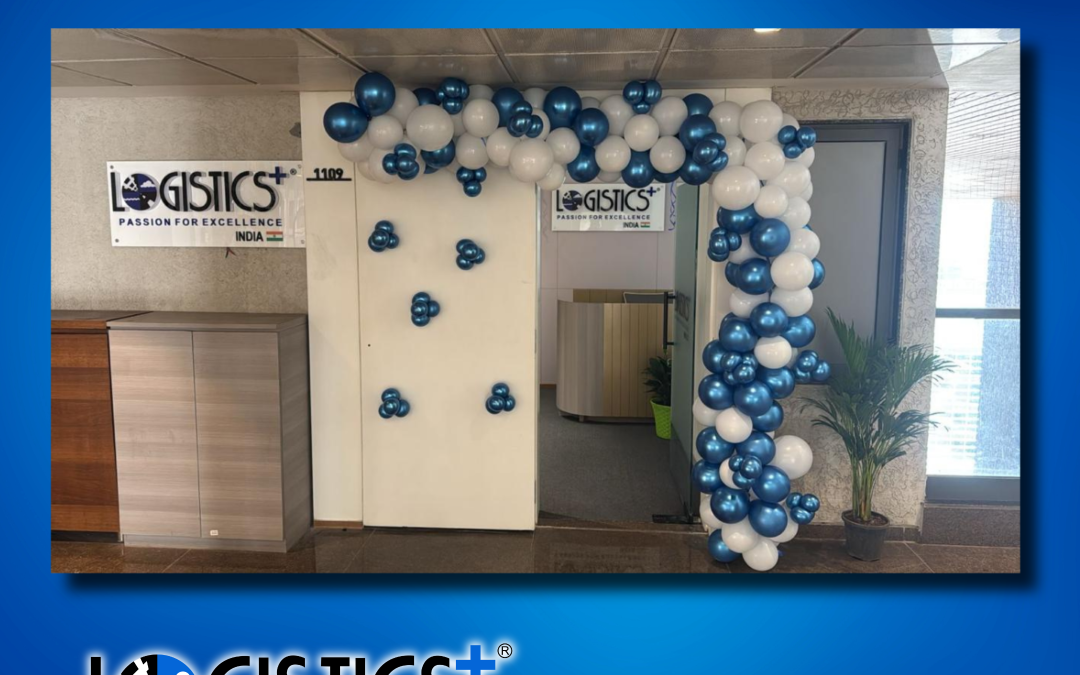
Logistics Plus (LP) India (formerly EVO Supply Chain Solutions) continues to build momentum across the region with two major developments in April 2026, further strengthening its operational capabilities and expanding its national footprint.
 Project Logistics Division Goes Live
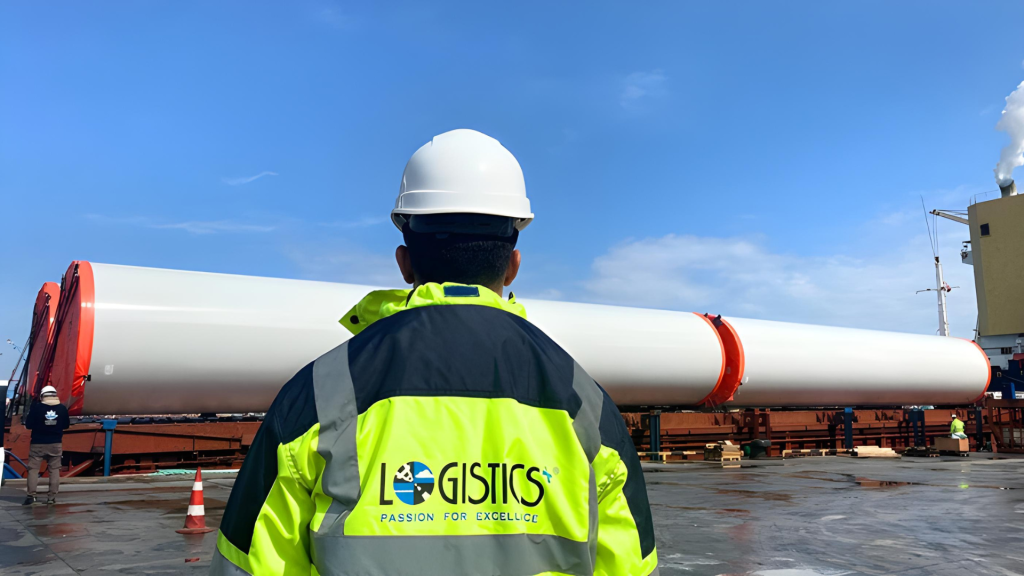
The Project Logistics Division has officially gone live at Logistics Plus India, marking a significant milestone in the company’s continued evolution as a trusted partner for complex and specialized cargo movements worldwide.
With the addition of Anup Nair as Director – Project Logistics, LP India has substantially enhanced its leadership depth and expertise in this high-value segment. Based in Mumbai, Anup brings more than three decades of experience delivering large-scale, turnkey project logistics solutions across the Oil & Gas, Infrastructure, and Industrial sectors.
His deep knowledge of heavy-lift operations, chartering, and end-to-end project execution will play a key role in building a strong, scalable project logistics vertical. This addition not only expands LP India’s service portfolio but also reinforces its reputation as a go-to provider for complex, high-stakes logistics projects.
Under Anup’s leadership, the division is well-positioned to accelerate growth, strengthen customer confidence, and capture new opportunities in India’s rapidly expanding project logistics market.
 Ahmedabad Office Launch Expands National Reach
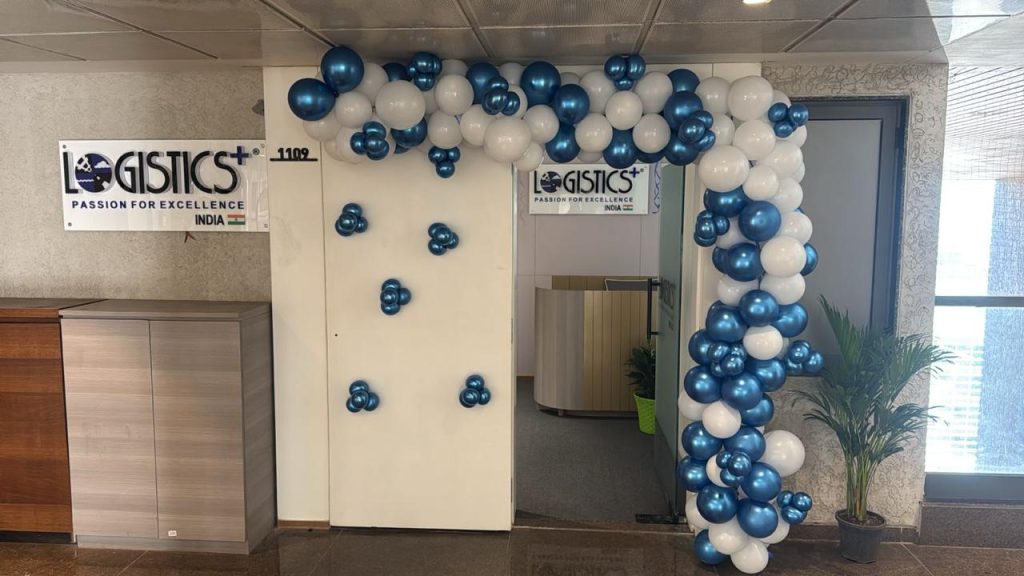
In parallel with its service expansion, Logistics Plus India has further strengthened its presence by launching a new office in Ahmedabad, one of India’s most dynamic commercial and industrial hubs.
This strategic expansion reinforces LP India’s commitment to scale, speed, and market leadership. The new Ahmedabad location enhances the company’s ability to deliver fast, flexible, and customized logistics solutions while enabling it to operate closer to key customers and industries.
By increasing its operational reach and enabling faster decision-making, the new office unlocks additional growth opportunities and improves connectivity between global capabilities and local execution.
Together, these developments reflect Logistics Plus India’s continued investment in people, infrastructure, and capabilities—driving sustained growth, competitive advantage, and long-term leadership across the Indian logistics market. To learn more about Logistics Plus India, please visit in.logisticsplus.com.