by Scott Frederick | Jan 6, 2026 | News
Why “more space” isn’t the goal—network flexibility is.
For Fortune 1000 manufacturers and distributors, warehousing is no longer just a place to store inventory. It’s a performance engine that influences service levels, cash flow, resiliency, and total landed cost. Yet many enterprises are facing the same constraints: labor pressures, rising customer expectations, shifting inventory strategies, and the need to respond quickly when demand or supply conditions change.
That’s why more organizations are turning to outsourced warehousing solutions—not simply to find capacity, but to gain flexible, scalable execution without taking on the fixed cost and complexity of expanding their internal footprint.
1) The market is shifting from “warehouses” to warehouse networks
Enterprise shippers are increasingly optimizing networks, not single buildings. The goal is to place inventory closer to demand, reduce transportation spend, shorten lead times, and build resilience into distribution—particularly during seasonal surges, promotions, port disruptions, and supplier variability.
In practice, that means many Fortune 1000 organizations are adding:
- Regional overflow capacity for peak periods
- Multi-node fulfillment to improve delivery performance
- Staging and transload options to reduce congestion and dwell time
- Flexible contract models that allow for volume swings
This is one reason 3PLs continue to grow in importance as companies outsource more operational complexity, including fulfillment and returns
Where Logistics Plus fits: Logistics Plus describes a North American warehousing network of over 11 million square feet (plus additional warehousing worldwide), designed to be “just the right size, in just the right place, for just the right length of time.”
2) Warehouse labor constraints are accelerating investment in process and technology
Even companies with strong operational discipline are finding that labor availability and cost can change the economics of in-house warehousing. That’s driving renewed emphasis on:
- Standardized processes
- Measurable KPIs and continuous improvement
- Modern labor management approaches
- Technology that makes operations less dependent on scarce labor
Industry outlook coverage continues to highlight labor tightness and efficiency pressure as drivers behind warehouse modernization and automation adoption.
Where Logistics Plus fits: For enterprise customers, the differentiator isn’t “can you warehouse product?”—it’s whether the 3PL can engineer consistent execution across multiple facilities while remaining responsive when requirements change.
3) WMS modernization is becoming a boardroom issue
Many enterprise shippers are discovering that their current WMS environment can’t keep up with new demands—especially in integration, visibility, and automation support. Industry reporting on “next-gen WMS” emphasizes scalability, adaptability, and readiness for AI/automation integrations as critical requirements.
What to ask a 3PL (enterprise-ready tech questions):
- Do your technology solutions integrate with our ERP, OMS, TMS, and carrier stack?
- Do you support EDI/API connections and customer-specific reporting?
- How do you handle inventory accuracy, cycle counts, and traceability?
- What visibility do we get (real-time dashboards, exception alerts, KPIs)?
Where Logistics Plus fits: In warehousing evaluations, LP’s value proposition is positioned as operations-first—solving warehousing challenges in “the real world,” supported by systems and reporting that match enterprise governance needs.
4) “Speed to deploy” is now a differentiator
Fortune 1000 logistics teams are increasingly measured on how quickly they can respond to disruption—without sacrificing compliance or performance. Outsourced warehousing solutions can support:
- Fast overflow capacity during peaks
- Contingency plans for supplier delays
- New product launches and promotions
- Market expansions and new customer onboarding
Where Logistics Plus fits: Logistics Plus can implement warehousing solutions quickly (engineering, labor, process, systems integration), not just offer a rate.
5) The best 3PL partners combine scale and agility
Enterprise shippers often feel stuck choosing between:
- Very large providers that can be slow, rigid, or standardized, and
- Smaller providers that are nimble but limited in network reach or capacity
A strong outsourced warehousing partner bridges that gap: enterprise-grade capability with a hands-on operating model.
Where Logistics Plus fits: The Logistics Plus North American footprint (11M+ sq ft) aligns with scaling expectations, while the company’s positioning emphasizes tailoring solutions to business needs and time horizons rather than forcing “one-size-fits-all” programs.

How to Choose an Outsourced Warehousing Partner
(Fortune 1000 Checklist)
- Network fit
- Do they have the facilities you need—now and in the future?
- Can they support multi-region distribution and growth?
- Operational capability
- Receiving, putaway, storage, pick/pack, outbound
- Cross-dock/transload
- Value-added services (labeling, kitting, light assembly)
- Returns processing (if needed)
- Governance and performance
- SLAs, KPIs, business reviews
- Inventory accuracy and cycle count programs
- Quality and compliance standards
- Technology integration
- WMS visibility and reporting
- ERP/OMS/TMS integration options
- Security posture and data reliability expectations (especially as AI and automation adoption grow)
- Commercial flexibility
- Scalability for peaks and promotions
- Contract structures that match volume reality
- Transparent cost drivers
Why Logistics Plus for Enterprise Warehousing?
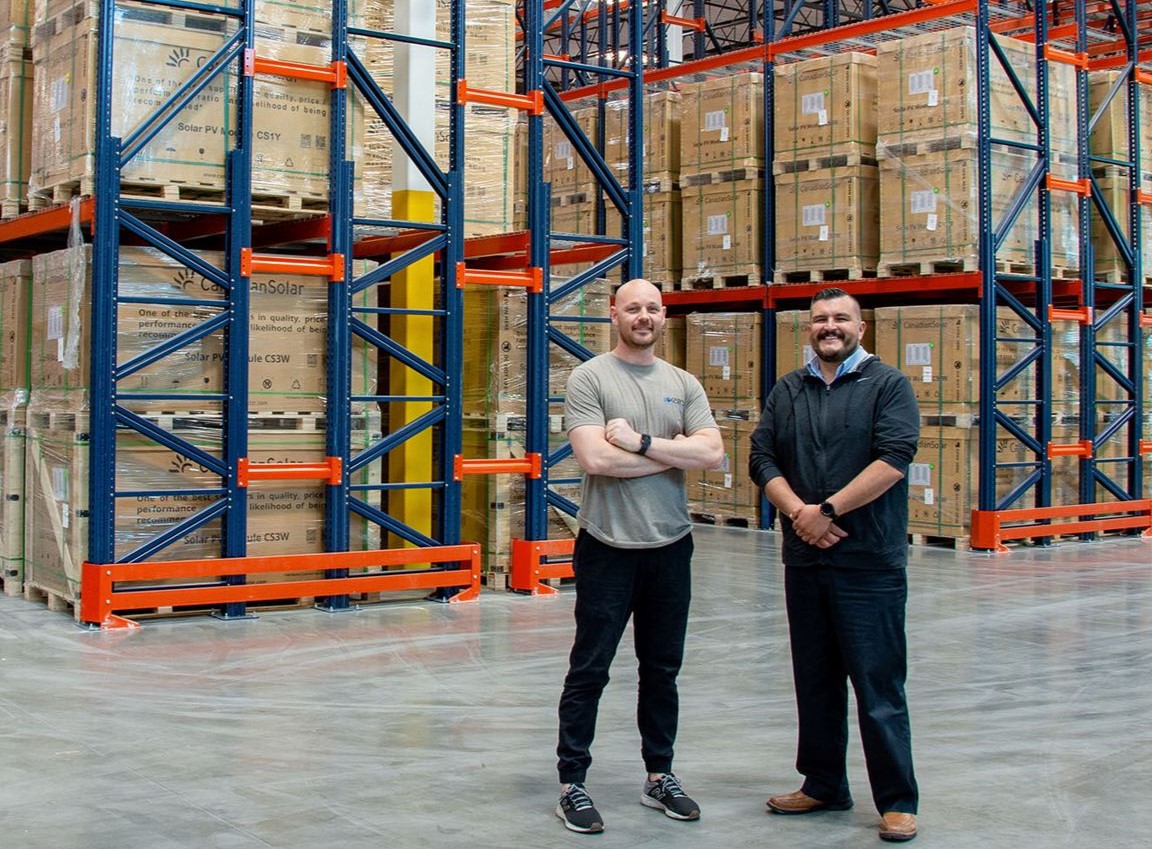 Logistics Plus provides warehousing and distribution services across North America, with over 11 million square feet of commercial warehouse space, plus additional global facilities, supporting customers who need flexible solutions and real-world execution.
For Fortune 1000 manufacturers and distributors, the ideal outcome is not just outsourced storage—it’s a warehousing program that improves service, lowers total cost, and scales with business change.
If your organization is evaluating outsourced warehousing solutions—for overflow, regional distribution, fulfillment, or network resilience—Logistics Plus can help assess your requirements and recommend a right-sized program for the right locations and timelines.
Talk to our warehousing team to review your network needs and identify capacity options.

by Scott Frederick | Mar 31, 2025 | News

The following is a reprint of an announcement recently made by Crow Holdings Development

Commitment by Logistics Plus Reflects N.J.’s Continued Appeal for Big-Box Requirements
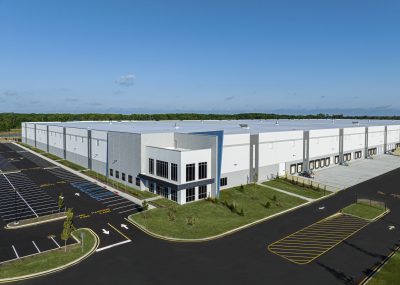
Logistics Plus at Millstone 8 Logistics Center
MILLSTONE, N.J. (March 27, 2025) – A 1 million-square-foot commitment by Logistics Plus, Inc. has locked in a full-building occupant for Crow Holdings Development’s Millstone 8 Logistics Center. The lease marks a regional expansion move for the U.S.-based global logistics firm and illustrates both the maturity of New Jersey’s Turnpike Exit 8 market and continued viability of large-scale industrial requirements in the state.
Newmark’s Andrew Crites, Art Leichner and Kyle Eaton represented Logistics Plus in the transaction. JLL’s Rob Kossar, Nate Demetsky and Leslie Lanne served as leasing agents for Millstone 8 Logistics Center, 505 State Highway 33 in Millstone. Crow Holdings Development, in partnership with The Carlyle Group and 2020 Acquisitions, launched speculative construction at the 140-acre, western Monmouth County site in 2021, drawn by its location adjacent to Exit 8.
“Crow Holdings Development has a long track record of staying ahead of the pack in identifying new and viable submarkets,” noted the firm’s Clark Machemer, senior managing director. “We recognized Exit 8 as a natural extension of the 8A Turnpike market, and the Logistics Plus lease is proof of concept. We are thrilled to provide our client with a world-class facility to meet its evolving needs.”
Logistics Plus is a global leader in transportation, warehousing, fulfillment, logistics, technology and unique supply chain solutions. According to its website, it is also one of the fastest-growing privately owned logistics companies and a certified great place to work. Established in 1996 in Erie, Pa., the company today has annual global sales of more than $600 million and over 1,200 employees in more than 50 countries.
“Warehousing continues to be a fast-growing segment for Logistics Plus, and the Northeast is no exception,” said Jenny Melgert, vice president, Supply Chain Solutions for Logistics Plus. “Our new 1 million-square-foot facility in New Jersey expands our Northeast warehousing capabilities and brings us closer to 10 million square feet of warehousing across the North America.”
Big Box Deals in a 3PL-Dominated Market
“JLL was honored to partner with Crow Holdings Development on the execution of the Logistics Plus lease,” Kossar said. “This transaction showcases the need for modernized industrial warehouse space and the cutting-edge advances of Crow Holdings and 2020 Acquisitions to meet tenant demands.”
According to Machemer, Millstone 8 Logistics Center’s new tenant illustrates the dominance of third-party logistics providers in driving the leasing market.
“Quality and location clearly provided a competitive edge in the case of our transaction with Logistics Plus,” he added. “The Newmark team’s strong understanding of their client’s needs and deep knowledge of the market were crucial in executing the transaction. Overall, the big box market in New Jersey continues to outperform regionally, with 3PLs leading the charge. This is a credit to the state’s central access to New York City, Philadelphia, and all points between and beyond.”
Millstone 8 Logistics Center also includes a 220,000-square-foot building occupied by United Legwear. The campus features a full complement of sustainable and Class A industrial design elements, as well as abundant car and trailer parking.
Crow Holdings Development’s Northeast regional presence is well established. Its latest project highlights include the recently completed Crow Holdings at Carteret in Carteret, N.J., with Golden Triangle Logistics Center in Wallkill, N.Y., and Crow Holdings at 6A in Burlington, N.J., under development. The firm has introduced more than 4.2 million square feet of new industrial inventory since 2020 and currently has 1 million square feet of construction in progress across New Jersey, New York and Pennsylvania.
Crow Holdings Development is the development platform of Crow Holdings, a privately owned real estate investment and development firm with 75 years of history, $33 billion of assets under management, and an established platform with a vision for continued success. The company specializes in multifamily and industrial development across high-opportunity markets in the United States, with a newly launched office development platform as well. Led by a highly experienced leadership team, the firm has developed more than 75 million square feet of industrial space since 2013.
###
About Logistics Plus
Learn more about Logistics Plus at logisticsplus.com.
About Crow Holdings Development
469 Bloomfield Avenue, 3rd Floor, Montclair, N.J. 07042
Media Contact:
Sandy Crisafulli / David Wilderotter
Caryl Communications
201-796-7788
[email protected] / [email protected]
by werkbot | Mar 19, 2024 | News
Warehousing on the West Coast of the United States can be a strategic decision for businesses that want to optimize their supply chain and reduce shipping costs. If your company is thinking about expanding west, it’s important to note the following advantages of finding a West Coast warehouse that fits your needs:
-
Proximity to major ports: The West Coast is home to some of the busiest ports in the country, like Los Angeles and Long Beach. This makes it ideal for businesses that import many goods from Asia, as it reduces the distance products need to travel after they are offloaded from ships. This translates to faster delivery times and potentially lower shipping costs.
-
Faster distribution to a large population: The West Coast is a populous region, with California being the most populated state in the US. Having a warehouse closer to your customers can significantly speed up delivery times. This is a significant advantage in today’s e-commerce climate, where consumers expect fast shipping.
-
Multimodal transportation options: Major transportation infrastructure, including airports, railways, and highways, span the West Coast. This allows for flexibility in how goods are moved from the warehouse to their final destination, enabling businesses to choose the most efficient and cost-effective method depending on the situation.
- Avoids maritime bottlenecks to the East Coast: The situations in the Suez Canal and Panama Canal are impacting available maritime capacity going to the East Coast. Importing and warehousing goods on the West Coast may be a viable alternative to potential East Coast bottlenecks.
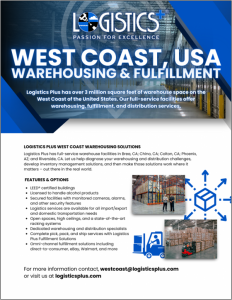
(Click to download our West Coast warehousing flyer)
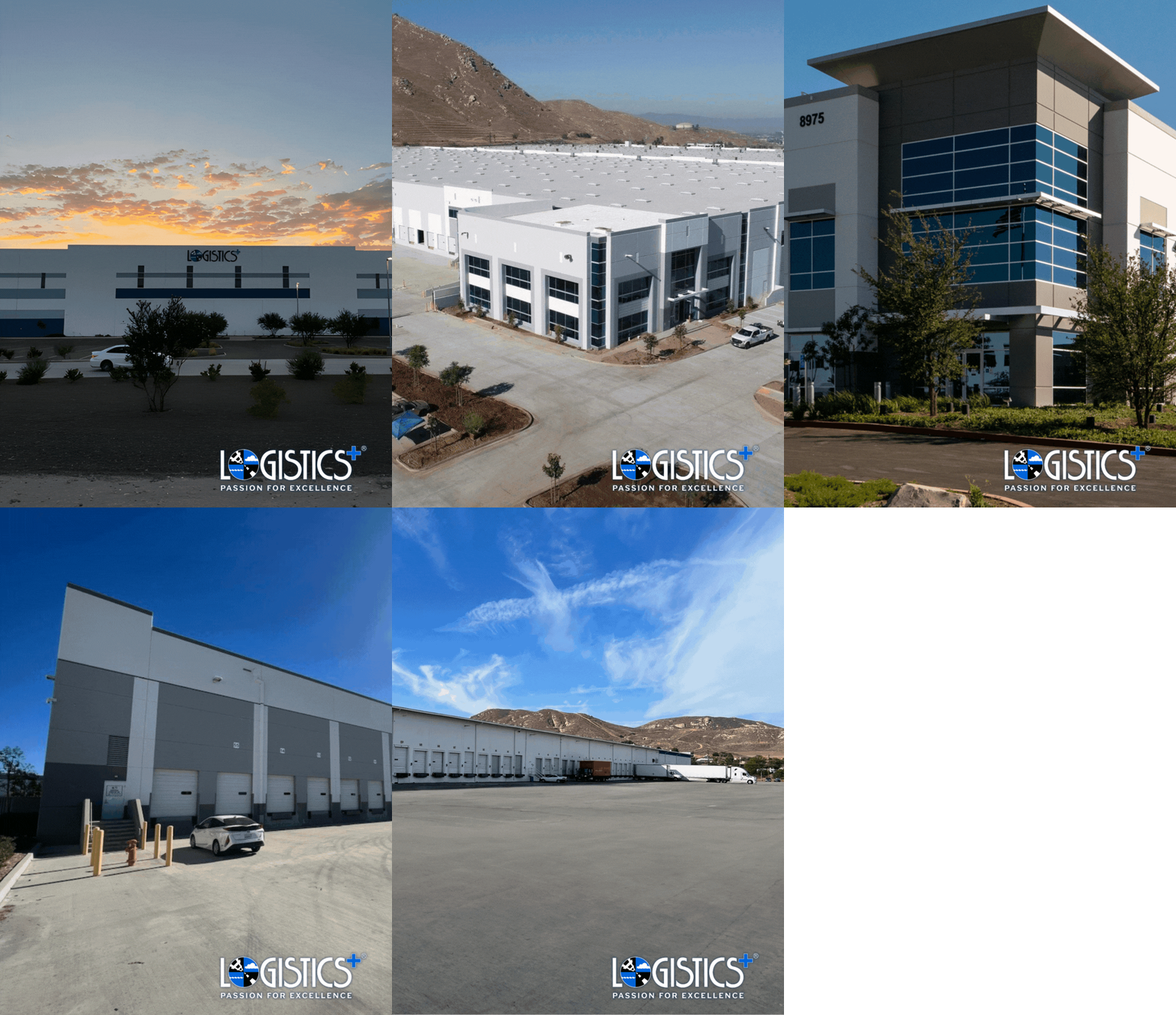
Look no further if you are searching for a reliable West Coast warehousing partner. Logistics Plus has over 3 million square feet of commercial warehousing space between California and Arizona alone. Our facilities are listed below:
Whether it’s total warehouse management, short/long-term storage, or customized fulfillment solutions, the Logistics Plus West Coast team will help diagnose your challenges, develop inventory management solutions, and then make those solutions work where it matters – out there in the real world.
If you have questions or want to contact our team, please email [email protected]. You can also use the button below to request more information or a risk-free warehousing quote.

by logisticsplus | Feb 22, 2024 | News
Logistics Plus Opens New Miami, Florida Warehouse
Totaling over 182,000 square feet, it is the company’s second warehouse in Miami.
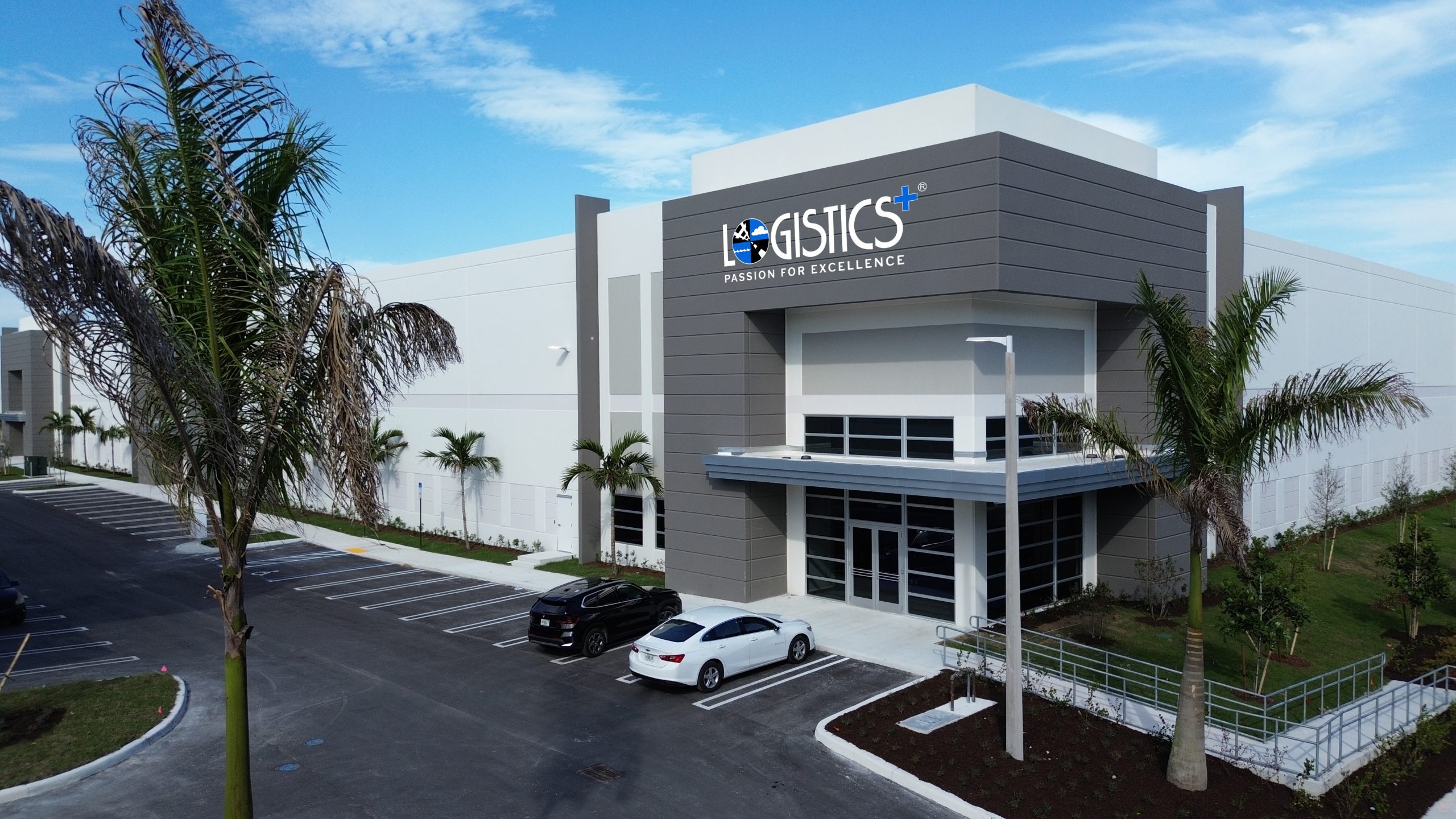 ERIE, PA (February 22, 2024) – Logistics Plus, Inc. (LP), a global leader in transportation, logistics, and unique supply chain solutions, is pleased to announce the opening of a new 182 thousand square foot warehouse at 9575 NW 174th Street, in Miami, Florida. Logistics Plus also has a facility in Doral, Florida, from which it has been operating for the past two years.
The new facility has 25 doors, 32-foot ceilings, 38 trailer positions, and a special 16×20′ oversized ramp door for OOG cargo and equipment, including automotive, yachts, boats, and maritime projects.
“We are proud to expand our growing operations here in southern Florida,” said Oscar Cabrales, Branch Manager for Logistics Plus Miami. ” With our new warehouse, we can continue providing world-class warehousing solutions for distributions, project cargo, pick pack and ship fulfillment, and anything our clients need for the South Florida market. Our facility will also be the gateway to our rapidly growing Caribbean and Latin American import and export operations.”
To learn more, visit logisticsplus.com/miami or email [email protected].
About Logistics Plus, Inc.
Logistics Plus, Inc. (LP) is a 21st-century logistics company and a leading worldwide provider of transportation, warehousing, fulfillment, global logistics, business intelligence, technology, and supply chain solutions. LP works in the background to help businesses manage their supply chains in an ever-changing world. Founded in 1996, today LP has annual global sales of over $500M with more than 1,000 employees located in 50+ countries worldwide. LP is recognized as one of the fastest-growing privately-owned logistics companies, a top 3PL provider, a top 100 logistics company, a top freight brokerage and warehousing provider, and a great place to work. With a Passion For Excellence™, its employees put the PLUS in LOGISTICS by doing the big things properly, plus the countless little things that together ensure complete customer satisfaction and success.



by logisticsplus | Feb 21, 2024 | News

Does your U.S. business import goods that will ultimately be exported to customers outside the United States? If yes, your business might be using a class 6 warehouse, also known as a “manufacturing warehouse” or “bonded manufacturing warehouse.” A class 6 manufacturing warehouse is a special type of bonded facility authorized by customs authorities that allows for the in-bond manufacturing or processing of goods using imported materials or materials subject to internal revenue taxes. These manufactured goods can then be exported or, in some cases, sold domestically under specific regulations.
The import/export benefits of using a class 6 manufacturing warehouse include:
- Reduced duty payments: Importers can defer or even avoid paying import duties on materials used in manufacturing until the finished product is exported. This can significantly improve cash flow and reduce upfront costs.
- Increased flexibility: Importers can adapt their products to different markets or customer specifications by modifying them within the warehouse.
- Improved logistics: By combining import and manufacturing in one location, importers can streamline their supply chain and simplify logistics.
- Enhanced competitiveness: By manufacturing goods closer to the target market, exporters can reduce transportation costs and offer more competitive prices.
- Increased control over quality: Exporters can ensure product quality by directly overseeing the manufacturing process within the warehouse.
- Access to new markets: Manufacturing in a bonded warehouse can help exporters comply with specific import regulations in certain countries, opening up new market opportunities.
It’s important to note that:
- Class 6 manufacturing warehouses have specific regulations and requirements established by customs authorities. Obtaining and maintaining a license can be complex (if needed, Logistics Plus can help).
- Not all types of goods are eligible for manufacturing in a class 6 warehouse (Logistics Plus can help you determine whether your goods are eligible).
- Recordkeeping and security protocols are stringent within these facilities (Again, Logistics Plus can help with some or all of this).
Overall, class 6 warehouses can offer significant benefits to importers and exporters seeking to optimize their supply chains, reduce costs, and access new markets. They also work well in tandem with class 3 warehouses.
Logistics Plus currently has a class 3 bonded warehouse in Strongsville, OH (Cleveland), with additional class 3 manufacturing warehouses available soon in Chicago, IL; Dallas, TX; Memphis, TN; and Phoenix, AZ. Logistics Plus can help import goods and store them at one of our class 3 bonded warehouses until they are ready to go to your class 6 warehouse for final manufacturing and export. If you currently don’t have a class 6 warehouse, Logistics Plus can help find or staff one for you.
Check out this U.S. CBP online guide to the various classes of bonded warehouses.
Contact Us to learn more about Logistics Plus warehouse solutions.

Page 1 of 2012345...1020...»Last »